
Acne redness lingers long after the actual pimple is gone. The pink, red, or purplish marks that stick around for weeks (or months) are technically a different problem than the breakout itself — and they need a different approach to treat. The good news: post-acne redness fades faster than most people think, with the right ingredients and patience.
Here’s a complete guide to reducing acne redness — from active breakouts to the post-inflammatory marks they leave behind — with the ingredients that actually work and the realistic timeline to see results.
The short answer: Active acne redness comes from inflammation; post-acne redness comes from dilated blood vessels (post-inflammatory erythema, or PIE) or excess melanin (post-inflammatory hyperpigmentation, or PIH). For active redness, use anti-inflammatory ingredients like niacinamide, centella asiatica, and azelaic acid. For PIE, look for vascular-calming ingredients and time — PIE typically resolves in 3–6 months. For PIH, use tyrosinase inhibitors (vitamin C, tranexamic acid) plus daily SPF.
The Three Types of Acne Redness
Not all acne redness is the same. Knowing what you’re looking at determines what works:
1. Active inflammatory redness
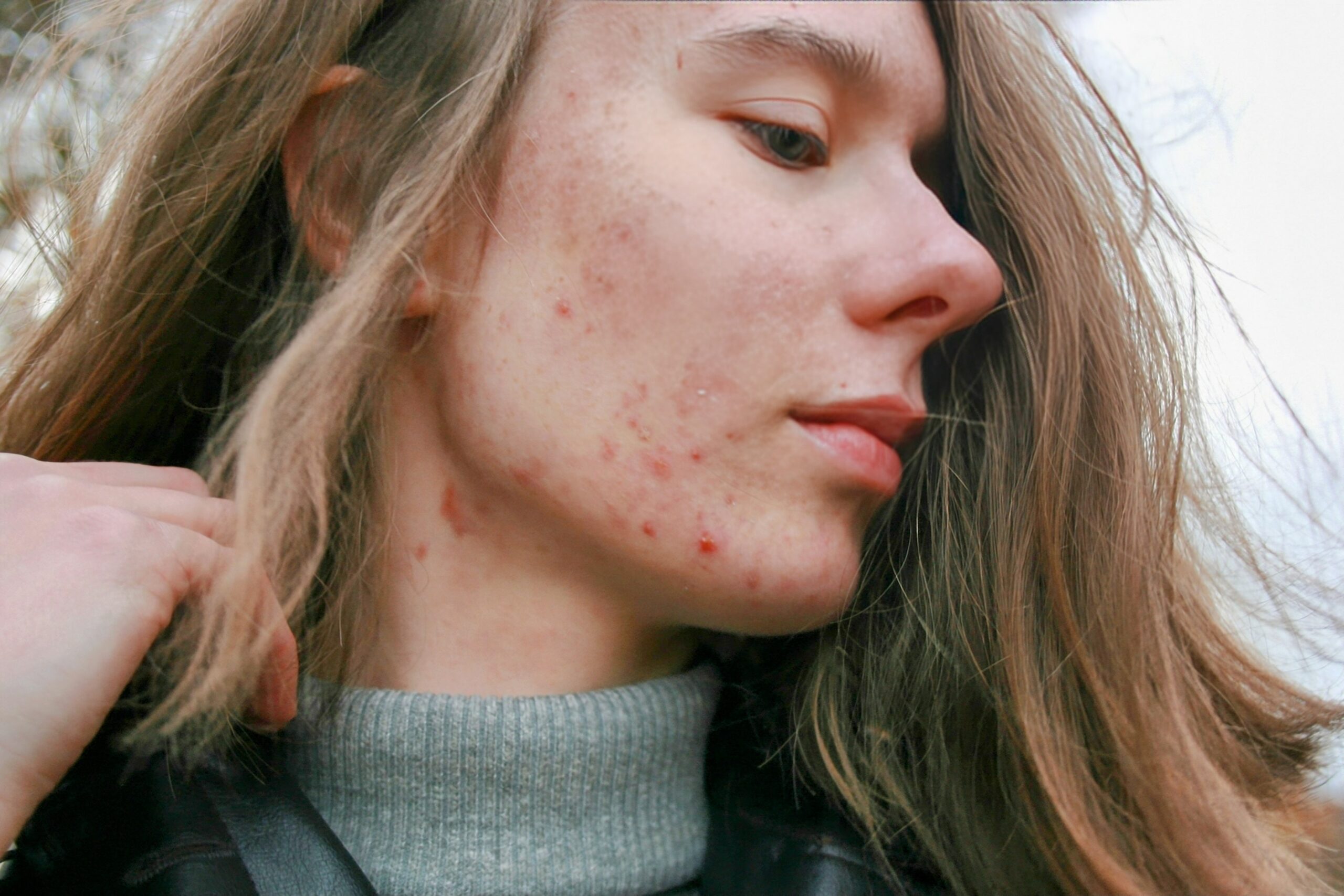
The bright pink-to-red flush around an active breakout. Caused by inflammation from the immune response to bacteria, sebum buildup, and rupture of the follicle wall. Goes away when the underlying breakout heals.
2. Post-inflammatory erythema (PIE)
Pink, red, or purple marks left after a breakout heals. These are not pigmentation — they’re capillaries that became dilated during the inflammatory phase and haven’t fully constricted yet. Common in lighter skin tones. Typically takes 3–6 months to fully resolve on its own.
3. Post-inflammatory hyperpigmentation (PIH)
Brown, tan, or grey-brown marks left after a breakout heals. Caused by melanocytes producing excess melanin in response to inflammation. Common in medium to deep skin tones. Typically takes 6–12 months to fade fully without treatment.
A simple test to tell PIE from PIH: press firmly on the mark for 3 seconds with your finger and release. PIE will fade briefly (because you’ve compressed the dilated capillaries). PIH won’t change appearance.
Ingredients That Reduce Acne Redness
For active inflammatory redness
- Niacinamide (4–10%) — strong anti-inflammatory; the safest and best-tolerated active for redness
- Centella asiatica (cica) — reduces inflammation and supports barrier repair
- Azelaic acid (10–20%) — anti-inflammatory + mildly antibacterial; also helps prevent post-acne marks
- Allantoin, panthenol (vitamin B5) — soothing, non-irritating
- Madecassoside — concentrated active from centella; powerful anti-inflammatory
- Green tea extract (EGCG) — antioxidant + anti-inflammatory
For post-inflammatory erythema (PIE)
There are no topical ingredients that quickly remove PIE — the dilated capillaries need time to constrict. But you can support the process:
- Niacinamide — supports vascular health
- Centella asiatica — calming, anti-inflammatory
- Mineral SPF — UV worsens vascular damage
- Avoid heat and friction — both make PIE worse
- Vascular laser (in-office) — can speed resolution if marks are persistent
For post-inflammatory hyperpigmentation (PIH)
PIH responds well to tyrosinase inhibitors and cell-turnover accelerators:
- Vitamin C (L-ascorbic 10–20%) — tyrosinase inhibitor + antioxidant
- Tranexamic acid (2–5%) — reduces melanin transfer + anti-inflammatory
- Niacinamide — reduces melanin transfer to skin cells
- Retinoids (retinol, retinaldehyde) — speed up cell turnover, shedding pigmented cells faster
- Azelaic acid (10–20%) — tyrosinase inhibitor; pregnancy-safe
- Alpha arbutin (1–2%) — tyrosinase inhibitor with low irritation
- Kojic acid (1–2%) — tyrosinase inhibitor
For a deeper dive into pigmentation, see our how to remove age spots guide — the same ingredients work for both.
Comparison Table: Treating Different Types of Redness
| Type | Appearance | Best topical ingredients | Realistic timeline |
|---|---|---|---|
| Active inflammatory | Bright red around active breakout | Niacinamide, azelaic acid, centella | Days–weeks (with breakout healing) |
| PIE | Pink-red flat marks | Niacinamide, mineral SPF, time | 3–6 months |
| PIH | Brown-tan flat marks | Vitamin C, tranexamic acid, niacinamide, retinoid | 6–12 months |
| Acne scarring (pitted/raised) | Textural changes | Topicals limited; needs in-office | Months–years with professional treatment |
| Rosacea (often mistaken for acne) | Persistent central redness | Azelaic acid, metronidazole, ivermectin | 4–12 weeks for visible improvement |
The Routine for Reducing Acne Redness
Morning
- Gentle cleanser (no foaming sulfates; see our face wash guide)
- Vitamin C serum (10–20% L-ascorbic acid) — helps with PIH and provides antioxidant protection
- Niacinamide + tranexamic acid serum — calms redness, helps prevent and fade marks
- Lightweight non-comedogenic moisturizer
- Mineral SPF 30+ — non-negotiable; UV exposure makes both PIE and PIH dramatically worse
Evening
- Gentle cleanse (double cleanse if you wore SPF/makeup)
- Azelaic acid (10–20%) on affected areas — works on active redness, PIE, and PIH simultaneously
- Retinoid (start with retinaldehyde 0.05% or retinol 0.25%, 2 nights per week) — accelerates fading of marks
- Niacinamide serum on non-retinoid nights
- Ceramide-rich moisturizer
Lifestyle Factors That Affect Redness
Sun exposure. The single biggest accelerator of post-inflammatory pigmentation. Without daily SPF, marks darken and last significantly longer. UV also worsens vascular sensitivity in PIE.
Heat. Hot showers, saunas, intense exercise without cooling down — all worsen vascular redness. Lukewarm water for face washing, cool-down protocols after workouts.
Friction. Aggressive towel-drying, scrubs, harsh exfoliation — all increase inflammation and make existing redness worse. Pat dry; chemical exfoliation only.
Diet. Spicy foods, alcohol, and very hot beverages can trigger flushing that worsens persistent redness. Not everyone is affected; track your specific triggers.
Stress. Cortisol increases inflammation and slows healing. Better sleep, exercise, and stress management make a measurable difference in skin appearance over time.
Common Mistakes That Make Acne Redness Worse
1. Picking at active breakouts. The fastest way to turn a 3-day pimple into a 3-month mark. Don’t pop, squeeze, or pick.
2. Over-exfoliating. Stacking AHAs, BHAs, retinoids, and scrubs to “speed up” healing actually slows it down by damaging the barrier and prolonging inflammation. Less is more.
3. Using strong actives on inflamed skin. Vitamin C, retinoids, and AHAs all increase irritation on inflamed skin. Wait until active breakouts calm before introducing strong actives — start with niacinamide and azelaic acid first.
4. Skipping moisturizer. A weakened barrier prolongs both active inflammation and post-acne marks. Moisturizing supports healing.
5. Skipping SPF. Without daily sunscreen, PIH darkens with every sun exposure and PIE persists much longer. This is the single most important step.
6. Trusting “fade quickly” products. No topical fades post-acne marks in a few days. Anything that claims to is either marketing or uses irritating high-strength acids that often worsen the problem.
When to See a Dermatologist
Consider professional help if:
- Active acne hasn’t responded to a consistent OTC routine after 12 weeks
- PIE persists past 6 months despite proper routine and SPF
- PIH persists past 12 months
- Acne is leaving pitted or raised scars (texture changes, not just color)
- You suspect rosacea (persistent central redness, flushing triggered by heat/alcohol/spice, visible blood vessels)
- Acne is leaving deep cystic marks
Dermatologists can prescribe stronger options (tretinoin, oral isotretinoin, hormonal treatments, spironolactone) and offer in-office treatments (chemical peels, vascular laser for PIE, Q-switched laser for PIH, microneedling for textural scars).
Vegan Considerations
All effective acne-redness ingredients (niacinamide, azelaic acid, vitamin C, tranexamic acid, centella, retinoids) are synthetic or plant-derived and vegan by default. Scan the formula for:
- Beeswax, lanolin, honey, shark squalene, bovine collagen
See our vegan skin care line guide.
Frequently Asked Questions
How long does post-acne redness last?
It depends on the type. Post-inflammatory erythema (red/pink marks) typically resolves in 3–6 months without treatment, faster with proper SPF and supportive ingredients. Post-inflammatory hyperpigmentation (brown marks) typically takes 6–12 months without treatment, 3–6 months with active treatment using vitamin C, tranexamic acid, and retinoids.
What’s the difference between PIE and PIH?
PIE (post-inflammatory erythema) is red/pink marks caused by dilated capillaries — more common in lighter skin tones. PIH (post-inflammatory hyperpigmentation) is brown/tan marks caused by excess melanin — more common in medium to deep skin tones. Press a finger firmly on the mark and release: PIE briefly fades, PIH doesn’t change.
Can niacinamide really reduce redness?
Yes — niacinamide is well-documented to reduce both vascular and inflammatory redness. It works in multiple ways: reduces inflammation, supports vascular health, strengthens the skin barrier, and reduces melanin transfer. At 4–10% concentrations applied twice daily, visible reduction in redness typically appears within 4–8 weeks.
Will sunscreen really make my marks fade faster?
Yes — daily broad-spectrum SPF is the single most impactful step for fading post-acne marks. UV exposure both worsens existing PIH (by stimulating melanocytes) and prolongs PIE (by aggravating vascular damage). Without daily sunscreen, marks darken with every exposure and last much longer.
Is azelaic acid better than vitamin C for acne redness?
They do different jobs. Azelaic acid (10–20%) is better for active inflammatory redness and is well-tolerated by sensitive skin. Vitamin C (10–20% L-ascorbic acid) is better for fading PIH and provides antioxidant protection against future damage. Many people benefit from both — vitamin C in the morning, azelaic acid in the evening.
Why does my face stay red after exercise?
Mild post-exercise redness is normal and fades within 30–60 minutes. Persistent redness past an hour, or redness that flushes with heat/alcohol/spicy food, may indicate rosacea — which gets worse with standard acne treatments and needs a different approach (azelaic acid, metronidazole, ivermectin, or laser).
Can I use vitamin C and niacinamide together?
Yes. The old myth that they “cancel each other out” was based on flawed 1960s research using unstable raw vitamin C in extreme conditions. Modern stabilized formulations work fine together — vitamin C in the morning and niacinamide twice daily is a well-established combination for reducing redness and post-acne marks.
The Bottom Line
Reducing acne redness comes down to identifying the type (active inflammation, PIE, or PIH), using the right ingredients (niacinamide, azelaic acid, vitamin C, tranexamic acid, retinoids), and being patient. Daily SPF is the single most important step — it stops marks from getting darker and helps them fade faster. Expect visible improvement in 4–8 weeks and full results in 3–6 months. If you’re not seeing progress at 12 weeks, see a dermatologist; rosacea, hormonal acne, and deeper scarring all need different treatments.
Sources & Further Reading
- Tranexamic Acid for Hyperpigmentation (Clin Cosmet Investig Dermatol, 2024)
- Niacinamide and Skin Barrier (Scientific Reports, 2025)
- Niacinamide + Tranexamic Acid for Pigmentation
- American Academy of Dermatology — Acne Scars & Post-Acne Marks
Last updated: May 6, 2026. For informational purposes only — not a substitute for professional dermatological advice. Persistent acne redness or scarring should be evaluated by a board-certified dermatologist.