


Living with MCAS (Mast Cell Activation Syndrome) or any kind of ultra-sensitive stomach can make every meal feel like a gamble. One wrong ingredient and the whole day shifts into bloating, flushing, fatigue, or inflammation. The mental load of constantly deciding what’s “safe” is exhausting on top of the physical symptoms.
A structured meal plan removes some of that daily decision-making. This 7-day low-trigger, low-histamine plan is built around fresh, simple ingredients and gentle cooking methods that most MCAS sufferers tolerate well. It’s not a cure or a treatment — it’s a calmer starting point you can adapt to your own triggers.
⚠️ Please read this first
MCAS is a serious medical condition that requires diagnosis and ongoing care from a doctor — typically an allergist or immunologist familiar with mast cell disorders. This article is general lifestyle information based on common patient experience and published low-histamine guidance. It is not medical advice and is not a substitute for working with your healthcare team.
Triggers vary enormously between individuals. A food considered “low-histamine” by general guidelines may still trigger you. If you have a diagnosed mast cell disorder, please review any meal plan with your doctor or a registered dietitian who has experience with MCAS before making changes — especially if you take medications, have other medical conditions, or have a history of anaphylaxis.
If you experience severe symptoms (throat tightness, difficulty breathing, severe drops in blood pressure, anaphylaxis), seek emergency care immediately. Diet alone is not the answer for severe MCAS.
Why MCAS-Friendly Eating Is So Difficult
The challenge with MCAS is that many “healthy” foods are high-histamine triggers: berries, fermented foods (yogurt, kefir, sauerkraut, kombucha), aged cheeses, vinegars, leftovers, citrus, tomatoes, spinach, avocado, and many spices. Coffee, alcohol, and chocolate can all activate mast cells too.
The pattern that helps most people with mast cell sensitivity is built around four principles:
- Freshness — histamine builds in foods stored over time. Leftovers, especially older than 24 hours, are often higher in histamine than the same food cooked fresh.
- Low-histamine ingredient choices — favor foods that haven’t been aged, fermented, or stored.
- Simple combinations — fewer ingredients per meal means fewer potential triggers and easier troubleshooting.
- Gentle cooking methods — steaming, baking, and boiling produce less histamine than long roasting, frying, or charring.
A simple example: spicy chicken with mixed salad and aged cheese (multiple potential triggers, raw ingredients, spices) versus steamed chicken with zucchini and white rice (single protein, cooked vegetables, neutral grain). The second is far less likely to provoke a reaction in a sensitive system.
About This 7-Day Plan
Each day below offers breakfast, lunch, dinner, a snack, and a drink suggestion. Portions are deliberately not specified — eat amounts that feel right for you. The ingredients are accessible across Europe and most of North America. If something on the list is a known trigger for you specifically, swap it for something you tolerate.
Day 1 — Reset and Calm
- Breakfast: Warm rice porridge with a baked pear. Gentle, low-fiber, low-histamine.
- Lunch: Steamed chicken with zucchini and white rice. A classic MCAS-safe combination.
- Dinner: Carrot soup (no cream). Light and easy to digest.
- Snack: Rice cakes with a drizzle of olive oil.
- Drink: Warm water — with a thin lemon slice only if you tolerate citrus (many MCAS sufferers don’t).
Day 2 — Reduce Bloating
- Breakfast: Oatmeal cooked with water, topped with chopped fresh apple.
- Lunch: Fresh turkey breast with boiled potatoes.
- Dinner: Simple vegetable broth (carrot, potato, zucchini).
- Snack: Low-histamine crackers (check labels for additives).
- Drink: Fresh ginger tea — make from fresh ginger root, not pre-bottled.
Day 3 — Stabilizing Day
- Breakfast: Warm quinoa bowl with a baked apple.
- Lunch: Steamed cod fillet with carrots.
- Dinner: Chicken soup with rice noodles (no leftovers — make fresh).
- Snack: Banana (only if you tolerate it — some MCAS sufferers don’t).
- Drink: Peppermint tea (skip if you have reflux).
Day 4 — Ultra-Gentle Day
- Breakfast: Rice porridge with a baked apple.
- Lunch: Soft-boiled chicken with mashed potatoes.
- Dinner: Blended zucchini soup.
- Snack: Rice crackers.
- Drink: Chamomile tea.
Day 5 — Light and Low-Trigger
- Breakfast: Steamed pear with quinoa.
- Lunch: White fish with rice and fresh parsley.
- Dinner: Carrot and potato soup.
- Snack: Fresh turkey slices (not deli — deli meats are aged/cured and very high in histamine).
- Drink: Warm water (with lemon only if tolerated).
Day 6 — Rebuild with Safe Energy Meals
- Breakfast: Oats cooked with water, topped with apple puree.
- Lunch: Chicken with pumpkin mash.
- Dinner: Simple broth — no onions, no garlic (both can trigger MCAS in some people).
- Snack: Rice cakes.
- Drink: Warm ginger water.
Day 7 — Gentle Closure
- Breakfast: Quinoa with a baked apple.
- Lunch: Fresh fish with soft cooked vegetables.
- Dinner: Simple steamed chicken with rice.
- Snack: Fresh pear slices.
- Drink: Chamomile with warm water.
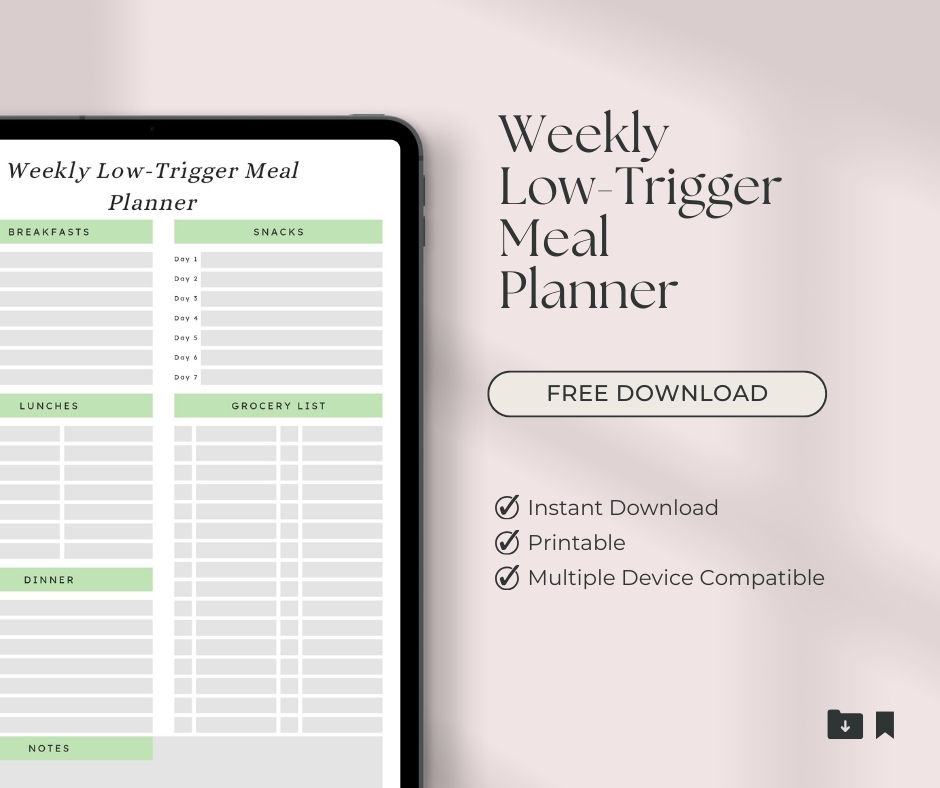
Free Weekly Planner
If you’d like a printable version of this format to track your own week, we made a low-trigger weekly meal planner you can use to map out your meals and note what worked:
Real-Life Trigger Scenarios
Morning bloating after yogurt. Fermented dairy is one of the highest-histamine foods there is. Switch to warm rice porridge or oats cooked with water and the morning often shifts entirely.
Afternoon flushing after lunch. Tomatoes, vinegars, citrus, and spices are common mast cell activators. Steamed chicken with zucchini and rice is a much safer lunch template while you’re identifying triggers.
Bloating from “healthy” salads. Raw vegetables, vinegar dressings, and cold proteins together are tough on a sensitive gut. Cooked vegetables with warm proteins are usually much better tolerated.
Ingredient Notes for European and North American Shoppers
Some low-trigger ingredients are easier to find in particular regions:
- Fresh turkey slices — widely available in France, UK, and most of Northern Europe. Crucially, this means deli counter turkey, not vacuum-packed pre-sliced deli meat (which is high-histamine due to aging and preservatives).
- Low-histamine apples and pears — Northern European varieties tend to be lower-acid than southern ones.
- High-quality cod and other white fish — Nordic countries have the freshest options. Anywhere else, ask for the catch date and avoid anything that’s been sitting more than 24 hours.
- Fresh organic vegetables — farmers’ markets and direct-from-farm produce are usually fresher than supermarket equivalents, which matters for histamine.
Low-Trigger Eating Tips
- Eat fresh. No leftovers older than 24 hours. If you batch-cook, freeze immediately rather than refrigerating.
- Choose gentle cooking — steaming, boiling, or baking. Avoid charring, deep-frying, and long roasting which can generate histamine and pro-inflammatory compounds.
- Avoid vinegars, fermented foods, and aged or cured meats.
- Peel fruits to reduce reactions to skin compounds.
- Drink warm beverages rather than cold — warm liquids tend to be gentler on a reactive system.
Listen to Your Body
This plan is a framework, not a prescription. Your triggers are personal — keep notes during the week, mark which meals felt best and which provoked symptoms, and use that to refine for week two. Many people find that 2–4 weeks of consistent low-trigger eating is enough to start identifying their specific reactivity patterns clearly.
If symptoms aren’t improving despite careful eating, or if you’re losing weight, becoming malnourished, or finding the safe-food list shrinking dangerously small, please involve a doctor and a registered dietitian familiar with MCAS. Restrictive eating can become its own health problem, and proper medical management (which may include mast cell stabilizers, H1/H2 blockers, and other medications) often does more than diet alone.
Want More Low-Trigger Resources?
For weekly low-trigger recipes, MCAS-safe grocery lists, and gut-calming routines, check out the HappyGut tools linked above. Take what’s useful, adapt what isn’t, and remember that finding stability with MCAS is a long process — you don’t have to figure it all out at once.

