

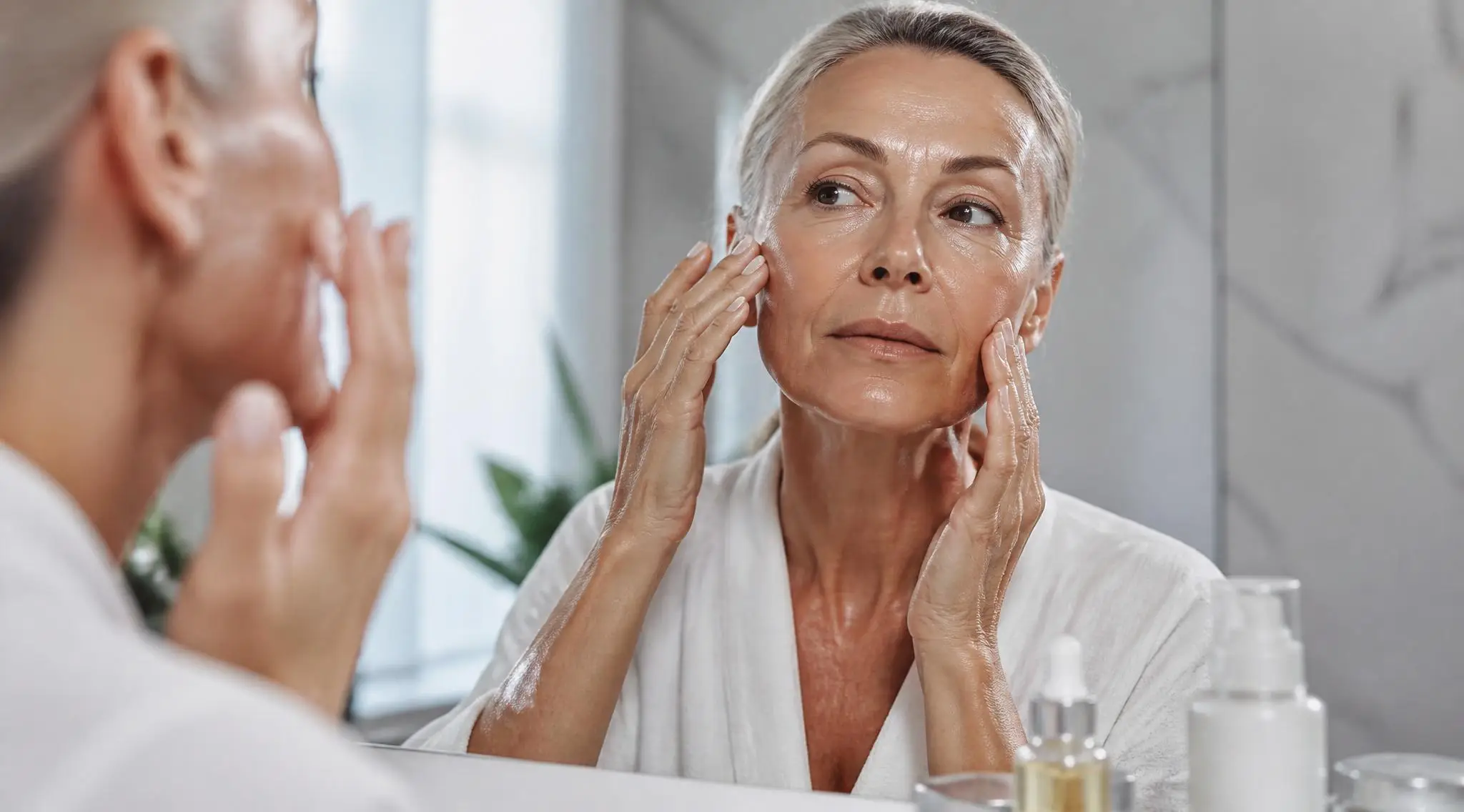
Wrinkles aren’t reversible by skincare alone — but they can be dramatically softened with the right ingredients, consistent SPF, and realistic expectations. The strategies that actually work for wrinkles are well-established in dermatology, and most people who follow them see meaningful improvement over 12–24 weeks. The strategies that don’t work — collagen creams, “instant tightening” serums, expensive bovine-derived treatments — are mostly marketing.
Here’s an evidence-based guide to reducing wrinkles, with the topical ingredients that have real clinical backing and the lifestyle factors that affect aging more than people realize.
The short answer: The most effective topical approach to wrinkles combines a retinoid (retinol, retinaldehyde, prescription tretinoin) at night, vitamin C and antioxidants in the morning, peptides for collagen support, and daily broad-spectrum SPF 30+. Expect visible results in 12–24 weeks of consistent use. Topicals can soften wrinkles; in-office procedures (laser, microneedling, injectables) are needed for deeper structural change.
Why Wrinkles Form (and Why Most “Wrinkle Cures” Don’t Work)
Wrinkles result from three overlapping processes:
- Collagen and elastin loss. Starting in your mid-20s, your skin produces roughly 1% less collagen per year. By 50, you’ve lost about 30% of what you had at 20.
- Photoaging. UV exposure breaks down collagen and elastin fibers — far faster than chronological aging. People who use daily SPF show dramatically fewer wrinkles in their 50s and 60s.
- Repeated facial movements. Crow’s feet, forehead lines, and frown lines form along the paths of muscle contraction. Once they’re visible at rest, only treatments that build new dermal volume soften them.
This is why “collagen creams” don’t work topically — collagen molecules are too large to penetrate the skin. Why “instant tightening” serums work for a few hours but not days. Why peeled-off masks make you feel like you’ve done something without actually changing your skin. The strategies that work address one of the three real causes.
The 5 Ingredients That Actually Work
1. Retinoids — the gold standard
Retinoids have the most clinical evidence of any anti-aging ingredient. They work by binding to nuclear receptors in skin cells, increasing turnover and stimulating new collagen production. Decades of trials show improvements in fine lines, deep wrinkles, and pigmentation.
- Prescription tretinoin — strongest evidence, more irritation
- Retinaldehyde (retinal) 0.05–0.1% — close to tretinoin’s efficacy with less irritation; see our retinaldehyde vs retinol guide
- Retinol 0.25–1% — milder OTC option with strong long-term evidence
- OTC adapalene 0.1% — works for both acne and photoaging
- Bakuchiol — plant-derived alternative, gentler, lower evidence but real
2. Vitamin C — for prevention and brightening
Vitamin C (L-ascorbic acid 10–20%) neutralizes UV-induced free radicals, supports collagen synthesis, and brightens uneven tone. The morning antioxidant pillar of any anti-aging routine.
3. Peptides — for collagen signaling
Peptides are short amino-acid chains that signal your fibroblasts to produce more collagen. The most clinically validated:
- Matrixyl (palmitoyl pentapeptide-4) — stimulates collagen synthesis
- Copper peptides (GHK-Cu) — tissue repair and collagen production
- Cyclized hexapeptide-9 — newer; a 2025 study found it outperformed retinol for crow’s feet
4. Niacinamide — for barrier and tone
Niacinamide supports the barrier and helps reduce age-related thinning. Pairs synergistically with retinoids by reducing their irritation and supporting recovery.
5. Hyaluronic acid — for plumping (short-term)
Hyaluronic acid pulls water into the upper skin layers, temporarily plumping fine lines. It doesn’t build new collagen, but it improves how skin looks day to day while the deeper actives do structural work.
Comparison Table — Anti-Wrinkle Approaches
| Approach | What it does | Timeline | Cost |
|---|---|---|---|
| Topical retinoid | Stimulates collagen, accelerates turnover | 12–24 weeks | $$ |
| Peptide serum | Signals collagen production | 8–16 weeks | $$ |
| Vitamin C + SPF | Prevents new wrinkles, brightens existing | Ongoing prevention | $ |
| Microneedling (in-office) | Induces collagen through controlled injury | 3–6 sessions, results over months | $$$ |
| Laser resurfacing | Resurfaces top layers, stimulates collagen | 1–3 sessions, weeks recovery | $$$$ |
| Botox | Relaxes muscles causing expression lines | Days; lasts 3–4 months | $$$ |
| Fillers | Adds volume to soften deep lines | Immediate; lasts 6–18 months | $$$$ |
The Daily Routine for Wrinkles
Morning
- Gentle cleanser (or water rinse for dry/mature skin)
- Vitamin C serum (10–20% L-ascorbic acid)
- Niacinamide or peptide serum
- Hyaluronic acid on damp skin
- Rich ceramide moisturizer (see our dry skin moisturizer guide)
- Broad-spectrum SPF 30+ — non-negotiable
Evening
- Double cleanse if you wore SPF/makeup
- Treatment serum (peptides on alternate nights)
- Retinoid (2–3 nights per week, building to 4–5)
- Eye cream with peptides
- Rich moisturizer with ceramides + cholesterol
- Optional facial oil for very dry or mature skin
See the full step-by-step in our nighttime routine guide.
Lifestyle Factors That Affect Wrinkles More Than People Realize
UV protection. The single biggest accelerator of wrinkles. Daily SPF prevents more wrinkles than any cream can reverse them. People who wear SPF daily from young adulthood have visibly different skin in their 50s.
Sleep position. Sleeping on one side compresses facial skin for hours every night, creating “sleep wrinkles” over years. Sleeping on your back, or alternating sides, helps. Silk pillowcases reduce friction.
Smoking. Cigarette smoke accelerates collagen breakdown, narrows blood vessels (reducing oxygen to skin), and creates the characteristic upper-lip lines from repeated smoking motion. Quitting at any age slows further damage.
Sugar and inflammation. Chronic high blood sugar causes glycation — sugar molecules cross-linking with collagen, making it stiff and brittle. A balanced diet supports collagen integrity over decades.
Sleep duration. Chronic sleep restriction increases cortisol, which breaks down collagen. People who sleep 5 hours look noticeably more aged than those who sleep 8.
Hydration. Internal hydration affects skin appearance. Chronic dehydration makes wrinkles look deeper and last longer.
When to Add In-Office Treatments
For deeper wrinkles or faster results, topicals may not be enough. In-office options:
- Microneedling — well-tolerated, multiple sessions, gradual results
- Laser resurfacing — fractional CO2 or erbium; significant downtime, dramatic results
- Radiofrequency (RF) — heat stimulates collagen; minimal downtime
- Botox — for expression lines (forehead, between brows, crow’s feet)
- Hyaluronic acid fillers — for static lines and volume loss
- Chemical peels — varied depths; resurface and stimulate collagen
Topicals work best as the maintenance phase between or alongside professional treatments. They don’t replace procedures for deep wrinkles, but they extend procedure results and slow new wrinkle formation significantly.
Common Mistakes
1. Expecting fast results. Retinoids and peptides need 12–24 weeks of consistent use to show visible changes. The first 4 weeks are mostly adjustment.
2. Stacking too many actives. Retinol + AHA + vitamin C all in one night damages your barrier. Vitamin C in the morning, retinoid at night, peptides on alternate nights.
3. Skipping the moisturizer. Retinoids irritate. A barrier-supportive moisturizer is what lets you tolerate the full strength of the active.
4. Inconsistent use. A retinoid used 3 nights a week for 6 months beats one used nightly for a month. Consistency over time matters more than intensity in any week.
5. Skipping SPF. Anti-aging without daily sunscreen is mathematically impossible. UV is the leading cause of wrinkles; one unprotected day undoes weeks of nighttime work.
Vegan Considerations
Most modern anti-wrinkle ingredients (retinoids, peptides, vitamin C, niacinamide, hyaluronic acid) are synthetic or fermentation-derived and vegan by default. Scan the formula for:
- Beeswax, lanolin, honey, bovine collagen (the most common in “firming” creams — and ineffective because collagen molecules are too large to penetrate)
For more, see our vegan skin care line guide.
Frequently Asked Questions
Can wrinkles really be removed without procedures?
Removed entirely, no — significantly softened, yes. Topical retinoids and peptides have well-documented effects on collagen production and wrinkle softening over 12–24 weeks of daily use. For deep wrinkles, professional procedures (laser, microneedling, injectables) deliver results topicals can’t match. Most effective approach: strong topical routine for prevention and maintenance, in-office procedures for deeper structural change.
At what age should I start anti-aging skincare?
Daily SPF and antioxidants are useful from your 20s — they prevent damage that becomes visible decades later. Retinoids typically make sense from mid-20s to early 30s as a preventive measure. Peptides and stronger formulas usually become relevant in your 30s and 40s as visible signs emerge. The best anti-aging strategy is sun protection started early.
What’s the best ingredient for wrinkles?
Prescription tretinoin has the strongest clinical evidence. Among OTC options, retinaldehyde and well-formulated peptides like cyclized hexapeptide-9 are the strongest. The most effective approach combines a retinoid at night with vitamin C and SPF in the morning. No single ingredient is a complete answer.
How long until I see wrinkle improvement?
Surface texture and tone usually improve in 4–8 weeks. Visible changes in fine lines typically take 8–16 weeks. Deep wrinkles typically need 16–24+ weeks of consistent use. Cell turnover takes about 28 days, and dermal collagen rebuilding is slower, so meaningful results are measured in months.
Are anti-aging creams worth the money?
The expensive brand isn’t necessarily better. What matters is the active ingredient list. A $20 retinol with a well-stabilized formula often outperforms a $400 cream with weaker actives. Look for retinoids, peptides, niacinamide, and antioxidants in the top half of the ingredient list — not buried at the bottom.
Can I use retinol while pregnant?
No. All retinoids (retinol, retinaldehyde, tretinoin, adapalene) should be avoided during pregnancy and breastfeeding. Bakuchiol is a plant-derived alternative often considered safer, though check with your doctor. Niacinamide, peptides, and azelaic acid are typically safe pregnancy options.
Will diet really affect my wrinkles?
Yes, gradually. Chronic high-sugar diets accelerate collagen glycation. Antioxidant-rich diets (vegetables, fruits, omega-3s) support collagen integrity. Hydration affects daily skin appearance. The diet effect is slow but cumulative — comparing identical twins where one ate poorly shows dramatic differences over 20+ years.
The Bottom Line
Getting rid of wrinkles is a months-and-years project, not a weeks one. The strategies that work — daily SPF, vitamin C in the morning, a retinoid at night, peptides on alternate nights — are well-established and accessible. Topicals soften wrinkles meaningfully but can’t reverse decades of damage; in-office procedures are needed for deeper structural change. Whatever you do, consistency over months beats intensity for weeks. Start basic, stay patient, and protect from the sun.
Sources & Further Reading
- Cyclized Hexapeptide-9 vs Retinol (J Cosmet Dermatol, 2025)
- Retinoids in Topical Antiaging Treatments (Advances in Therapy, 2022)
- Niacinamide and Skin Barrier (Scientific Reports, 2025)
- AAD — Wrinkle Treatments
Last updated: May 6, 2026. For informational purposes only — not a substitute for professional dermatological advice.