
Most anti-aging conversations focus on the face — and your body skin gets the leftover, often-ignored care that’s a fraction of what your face routine looks like. But the skin on your neck, chest, hands, arms, and legs ages too. It shows wrinkles, dryness, crepiness, and pigmentation just like facial skin. The difference is that body skin is far easier to neglect, and most “body lotions” are formulated for adequacy rather than for anti-aging support.
Here’s how to choose a body moisturizer for aging skin, the ingredients that actually work on the body, and how to build a body skincare routine that doesn’t get abandoned by Tuesday.
The short answer: The best body moisturizer for aging skin combines humectants (glycerin, urea, hyaluronic acid), ceramides and other emollients for barrier repair, and active ingredients like niacinamide, retinol, or AHAs for cell turnover. Look for fragrance-free formulas with substantial concentrations of actives, applied daily on damp skin. Don’t forget hands, neck, and chest — these areas show aging first.
Why Body Skin Ages Differently From Facial Skin
Body skin and facial skin share the same underlying biology — but they live very different lives. Three differences matter for anti-aging:
- Body skin is thicker. Most body skin has more layers of stratum corneum than facial skin. This makes it more resilient but also slower to respond to active ingredients.
- Body skin has fewer sebaceous glands. Less natural oil means more visible dryness and rougher texture, especially after middle age.
- Body skin gets different UV exposure patterns. Your face gets daily UV from incidental exposure; your hands, neck, chest, and forearms often get even more — and rarely get sunscreen unless you’re at the beach.
The areas that show aging fastest on the body — hands, neck, decolletage, forearms — are the most chronically sun-exposed. The areas that age slowest (covered by clothing) often look 10–20 years younger than the rest of the body in the same person.
The 4 Ingredient Categories Body Moisturizer Needs
1. Humectants — for hydration
Body skin loses moisture faster as you age. Humectants in moisturizer pull water into the upper skin layers:
- Glycerin — most common; well-tolerated
- Urea (5–10%) — humectant + mild keratolytic; ideal for crepey skin
- Hyaluronic acid — strong hydration
- Lactic acid (5–12%) — humectant + AHA for cell turnover
- Glycerol, sorbitol — supplementary humectants
2. Emollients — for barrier repair
Body skin needs the same lipids facial skin does:
- Ceramides — replace what your skin barrier is missing
- Sugarcane squalane — lightweight, skin-mimicking
- Shea butter, mango butter — rich plant-derived emollients for dry body skin
- Sunflower oil, jojoba oil — supplementary plant oils
3. Occlusives — for moisture seal
Body lotions tend to need more occlusive ingredients than face moisturizers because of the larger surface area and water loss:
- Petrolatum — strongest seal; especially useful for hands and feet
- Plant butters (shea, cocoa) — vegan-friendly alternatives
- Dimethicone — lighter occlusive; less greasy feel
- Vegan waxes (candelilla, sunflower wax) — plant alternatives to beeswax
4. Active ingredients — for anti-aging
This is what separates a great body moisturizer for aging skin from a generic lotion:
- Niacinamide (2–5%) — barrier support, evens tone, reduces redness
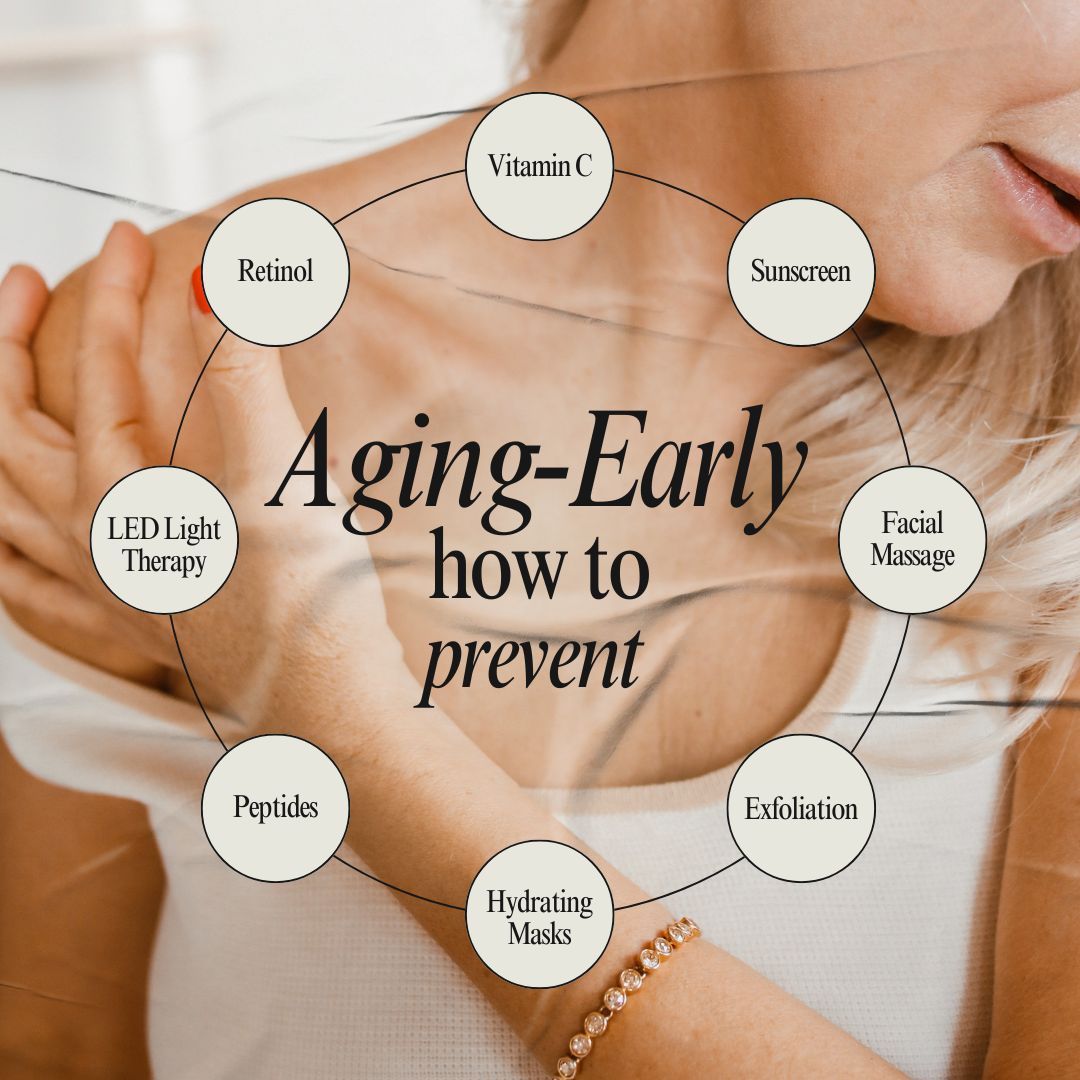
- Retinol (0.05–0.5% body strength) — accelerates cell turnover; strong evidence for photoaging
- AHAs (lactic acid, glycolic acid) — surface exfoliation for rough or crepey texture
- Vitamin C derivatives — antioxidant + brightening for sun-damaged areas
- Peptides — collagen support
- Bakuchiol — plant-derived retinol-like ingredient; safer during pregnancy
Comparison Table — Body Concerns and Best Ingredients
| Concern | Key ingredients | Realistic timeline |
|---|---|---|
| Dry, flaky body skin | Glycerin, ceramides, plant butters, urea | 1–2 weeks |
| Crepey skin (arms, chest) | Lactic acid, retinol, niacinamide, peptides | 8–16 weeks |
| Sun spots (hands, decolletage) | Vitamin C, niacinamide, tranexamic acid, retinol | 12–24 weeks |
| Sagging neck | Retinol, peptides, ceramides + daily SPF | 12–24+ weeks (topical limits) |
| Keratosis pilaris (bumpy upper arms) | Urea 10%, lactic acid, salicylic acid | 4–8 weeks |
| Stretch marks (mature) | Tretinoin (Rx) + moisturizer; topicals limited | 16–24 weeks; full reversal unlikely |
The Daily Body Anti-Aging Routine
Morning
- Lukewarm shower (not hot) with a gentle body wash — sulfate-free, fragrance-free
- Pat dry, leaving skin slightly damp
- Body moisturizer with humectants + emollients + niacinamide
- Broad-spectrum SPF 30+ on exposed areas — hands, neck, chest, forearms always; whole body if you’ll be outdoors
Evening
- Lukewarm shower or rinse if needed
- Targeted treatment on areas of concern (retinol on crepey arms; AHA on rough texture)
- Rich body moisturizer with ceramides + glycerin + plant butter
- Hand cream with SPF for daytime (yes, your hands age fastest)
The Most-Ignored Anti-Aging Areas
Neck and decolletage
The neck and chest show aging dramatically — fine lines, crepiness, “necklace lines,” and pigmentation are common in your 40s and beyond. The skin here is thinner than facial skin and gets significant UV exposure. Apply your facial moisturizer and SPF down to your collarbones; consider a retinoid 2–3 nights a week.
Hands
Hands often look 10+ years older than faces because they get more sun, less moisturizer, and constant exposure to soap and water. A hand cream with SPF during the day and a richer hand cream with retinol or niacinamide at night makes a measurable difference within months.
Forearms
Sun exposure here shows up as pigmentation and rough texture. Apply your body moisturizer with daily SPF to forearms whenever you’ll be outdoors.
Knees and elbows
Often dry and bumpy. A urea-based lotion (10%) or lactic acid lotion (12%) smooths these areas within weeks.
How to Apply Body Moisturizer Effectively
- Apply on damp skin. Within 3 minutes of toweling off, while skin still holds water. This single change makes more difference than the brand of lotion you use.
- Use enough. Most people apply far too little body lotion. Body skin is thirsty; don’t ration.
- Massage in for 30 seconds. Helps circulation and absorption.
- Don’t forget the hard-to-reach areas. Back of arms, back of legs, neck, decolletage.
- Layer if needed. A humectant serum first (hyaluronic acid), then a rich cream on top is more effective than a single product for very dry body skin.
How Body Skin Anti-Aging Compares to Face
Body skin responds to the same ingredients facial skin does, but the protocols differ:
- Body skin is more tolerant. You can use higher concentrations of actives (like 10% lactic acid lotion) without the irritation those concentrations would cause on the face.
- Body skin responds more slowly. Thicker stratum corneum means actives take longer to show visible results — 12+ weeks is realistic for crepiness, pigmentation, and texture changes.
- Body sunscreen is the biggest gap. Most people apply SPF to their face daily but not their body. Body sunscreen on regularly-exposed areas (hands, neck, chest, arms) makes more visible long-term difference than any cream.
For face anti-aging strategies, see our best cream for deep wrinkles and how to get rid of wrinkles guides.
Vegan Considerations
Most body lotions contain at least one of these animal-derived ingredients:
- Lanolin — common in heavy body lotions; replace with shea butter or sugarcane squalane
- Beeswax (cera alba) — frequent thickener; replace with candelilla or sunflower wax
- Honey, royal jelly — in “luxe” formulations; replace with panthenol or oat
- Bovine collagen — common in “firming” body creams; ineffective because of molecule size
- Shark squalene — replace with sugarcane squalane (functionally identical)
- Carmine — in tinted body products
For more, see our vegan skin care line guide.
Common Mistakes
1. Using whatever body lotion is at the back of the cabinet. Anti-aging body skincare deserves intentional product selection, not whatever you grabbed five years ago.
2. Skipping body SPF. Daily body SPF on hands, neck, chest, and forearms is the single most impactful anti-aging body practice. No body cream can reverse what unprotected UV does daily.
3. Hot showers. Hot water strips body skin lipids the same way it strips facial skin lipids. Lukewarm only; shorter showers.
4. Bar soap as body wash. Most bar soaps are alkaline and strip lipids. Switch to a hydrating body wash with glycerin.
5. Applying to dry skin. Body moisturizer on bone-dry skin doesn’t seal in moisture — there’s no moisture to seal. Apply within 3 minutes of toweling off.
6. Forgetting hands. If you do nothing else, apply hand cream with SPF every morning. Your hands age fastest.
Frequently Asked Questions
Is body moisturizer different from face moisturizer?
Yes — body moisturizers are typically thicker, less expensive per ounce, and may include higher concentrations of certain ingredients (urea, lactic acid) that would irritate facial skin. Most body lotions are also less restrictive on comedogenic ingredients because body skin tolerates them better.
Can I use my face moisturizer on my body?
Yes, but it’s expensive — body coverage requires much more product than facial coverage. For specific high-aging areas (neck, decolletage, hands), extending your facial moisturizer makes sense. For arms, legs, and torso, a dedicated body moisturizer is more practical.
Can I use retinol on my body?
Yes — and many dermatologists recommend it for crepey arms, chest, and hands. Use a body-strength retinol lotion (typically 0.05–0.5%) 2–3 nights per week. Pair with morning SPF on body areas getting exposure. Avoid during pregnancy.
What’s the best body moisturizer for crepey skin?
One that combines a humectant (urea 10% or lactic acid 5–12%) with ceramides and a retinoid or peptide. Look for fragrance-free formulas. Apply daily on damp skin. Visible improvement typically takes 8–12 weeks.
How much body moisturizer should I apply?
About a quarter-sized amount per limb, more for very dry skin. Most people use far too little. Body skin is thirsty; generous application is correct.
Do “firming” body creams actually work?
Most don’t, especially those built around bovine collagen (which doesn’t penetrate). The body creams that work for firmness contain retinol, peptides, niacinamide, or AHAs — all the same actives that work on facial skin. Read the ingredient list and look for these, not marketing terms.
Is body SPF really necessary if I’m not at the beach?
Yes for hands, neck, chest, and forearms — these areas get cumulative daily UV exposure even on cloudy days and through car windows. They age fastest on the body for exactly this reason. Daily SPF on these areas dramatically slows visible aging.
The Bottom Line
The best body moisturizer for aging skin combines humectants, ceramides, and active anti-aging ingredients — applied daily on damp skin, with extra attention to hands, neck, and decolletage. Daily body SPF on regularly-exposed areas is the single most impactful body anti-aging practice. The same ingredients that work on facial skin (retinoids, peptides, niacinamide, vitamin C) work on body skin too — they just take longer to show visible results. Be patient, be consistent, and don’t skip the body just because you can hide it under clothes.
Sources & Further Reading
- Retinoids in Topical Antiaging Treatments (Advances in Therapy, 2022)
- Niacinamide and Stratum Corneum Hydration (Scientific Reports, 2025)
- Ceramide-and-Niacinamide Moisturizer (J Cosmet Dermatol, 2024)
- American Academy of Dermatology — Skin Care Basics
Last updated: May 6, 2026. For informational purposes only — not a substitute for professional dermatological advice.