
Your skin is as individual as your fingerprint — shaped by genetics, environment, and lifestyle. Understanding why your skin behaves the way it does makes every skincare decision easier. Whether your skin feels like a desert, an oil slick, or something in between, here’s the actual biology behind skin types, what shifts them, and how to care for yours.
The Five Skin Types
Your skin type comes down to how much oil (sebum) it produces, how well it retains moisture, and how reactive it is to external factors:
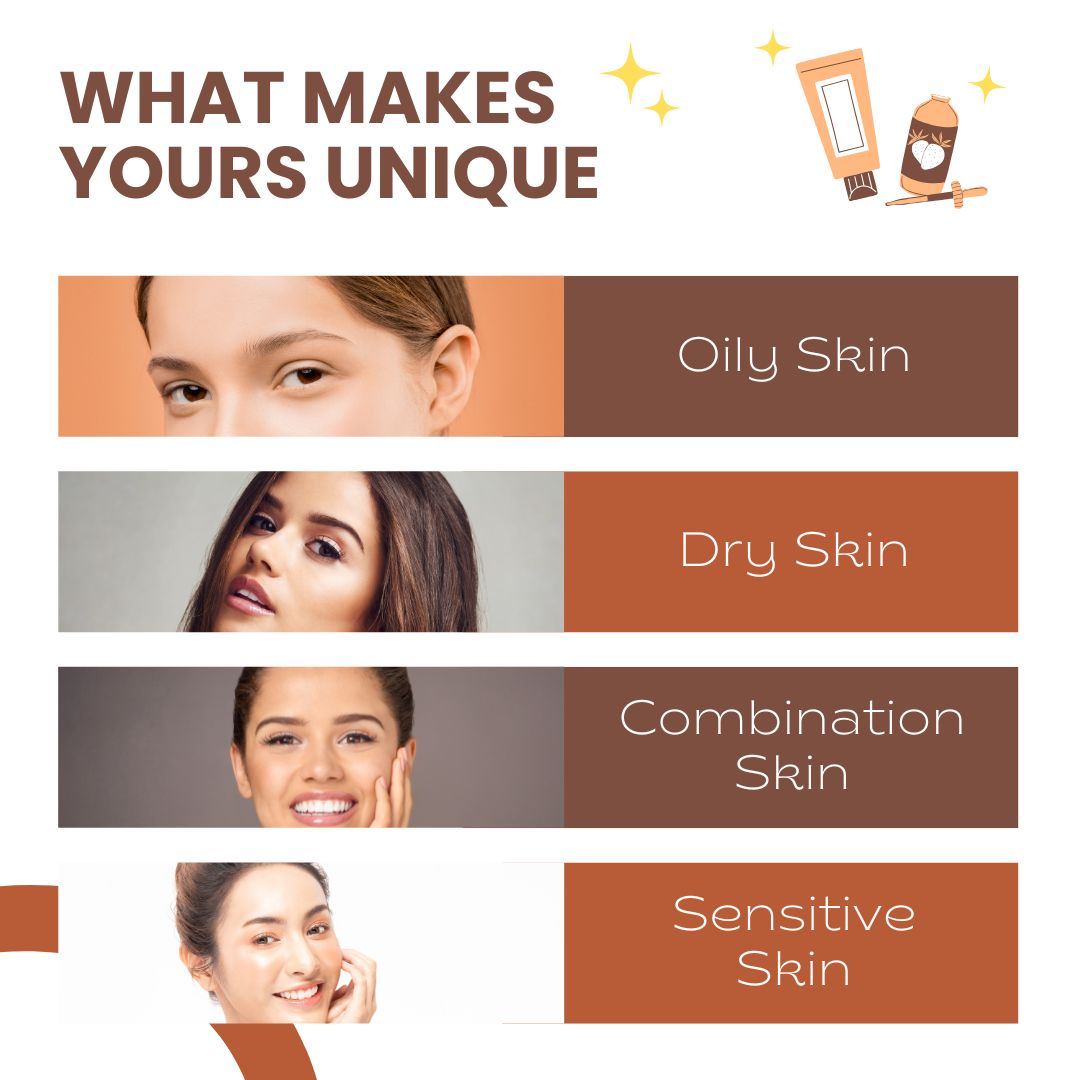
- Normal — balanced, not too oily or dry, smooth texture, few blemishes.
- Oily — excess sebum, shine, and a tendency toward congestion and acne.
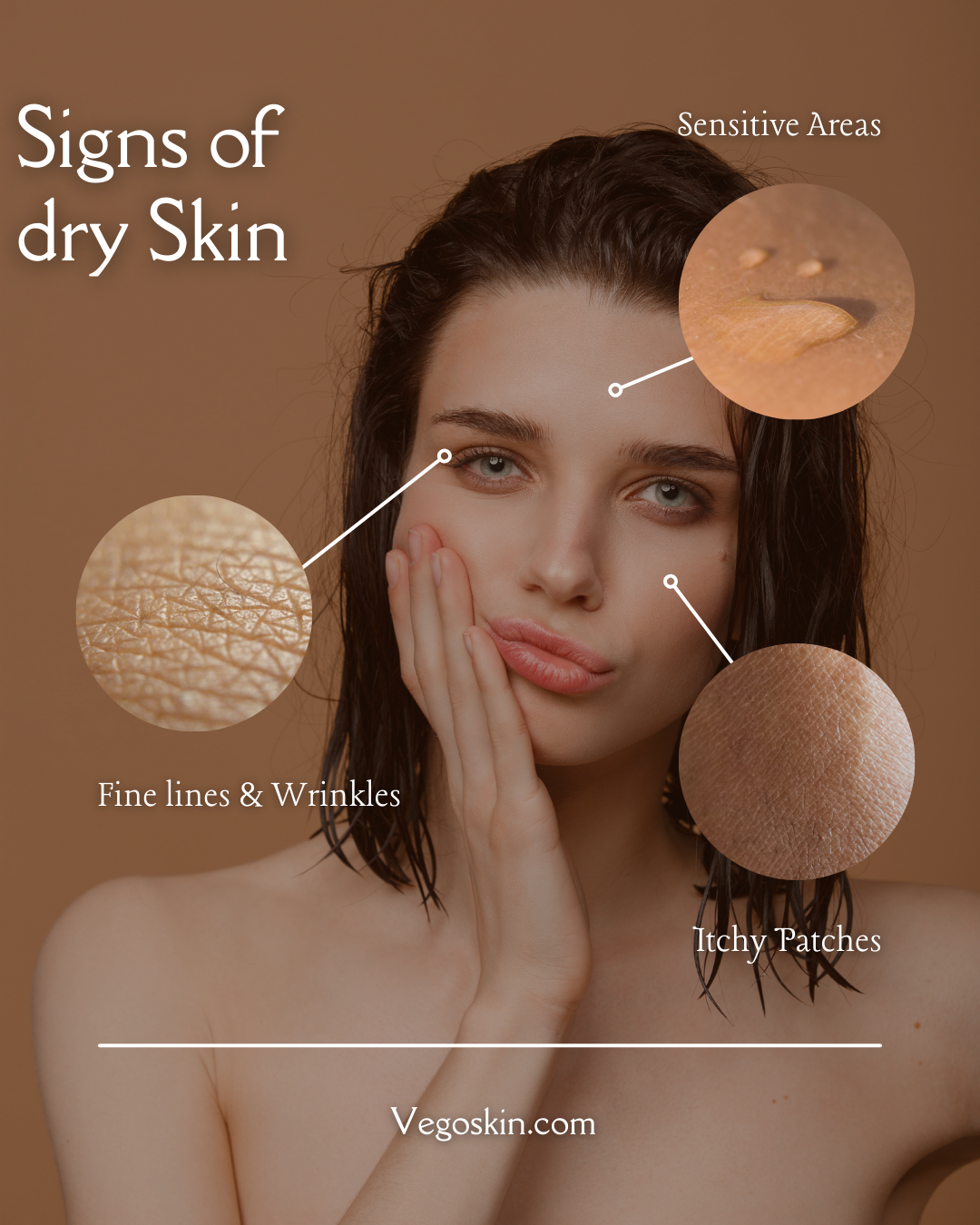
- Dry — insufficient oil or moisture, often tight, flaky, or rough.
- Combination — oily T-zone with normal-to-dry cheeks.
- Sensitive — prone to irritation, redness, and reactions, often layered on top of another type.
What causes these differences is a blend of genetics, hormones, and environment. Here’s how it works.
The Biology Underneath
Your skin has three layers: the epidermis (the outer barrier), the dermis (home to collagen, elastin, and oil glands), and the subcutaneous layer (insulation and cushioning). Your skin type is largely determined by how active your oil glands are and how well your barrier holds moisture.
Sebaceous (Oil) Glands
These glands sit in the dermis and secrete sebum, a waxy substance that lubricates and protects skin. Their size and activity are largely genetic, which is why oily and dry skin tend to run in families.
- Oily skin has overactive glands producing excess sebum that can clog pores. Research links certain gene variants to oilier skin.
- Dry skin often has underactive glands or an impaired barrier, so the top layer lacks the lipids needed to trap water.
The Skin Barrier
The outermost layer (stratum corneum) works like a brick wall — skin cells are the bricks, lipids are the mortar. In normal or combination skin this barrier holds moisture well. In dry or sensitive skin it’s compromised, letting water escape and irritants in. This is why barrier-supporting ingredients (ceramides, hyaluronic acid, niacinamide) matter so much for those types.
Genetics
Your DNA sets the baseline — sebum production, melanin levels (pigmentation and sun sensitivity), and collagen structure. Some genetic markers predispose people to acne or eczema. But genetics isn’t the whole story; environment and habits modify how your skin actually behaves day to day.
What Changes Your Skin Over Time
Climate and Humidity
Where you live matters. Humid climates keep skin hydrated but can worsen oiliness; arid climates strip moisture and leave even normal skin dry. The same person can be “combination” in the tropics and “dry” in the desert. Low humidity disrupts the barrier and increases water loss through the skin.
Diet and Hydration
What you eat shows up on your skin. High-sugar and (for some people) high-dairy diets can trigger oil production and acne. Omega-3s (salmon, walnuts) and antioxidants (berries, leafy greens) support the barrier and reduce inflammation. Adequate water keeps any skin type from looking dull and tight.
Stress and Hormones
Cortisol from stress stimulates oil glands, which is why breakouts often appear before big events. Hormonal shifts during puberty, menstruation, pregnancy, and menopause can temporarily change your skin type — many women get oilier during pregnancy and drier after menopause as estrogen declines.
Your Skincare Habits
Over-washing or harsh products strip natural oils and can turn normal skin dry or sensitive. Heavy creams on oily skin clog pores. The skincare you use is one of the few skin-type factors fully in your control.
How to Identify Your Skin Type at Home
A simple test:
- Cleanse with a gentle cleanser and pat dry.
- Wait 2–3 hours without applying anything.
- Observe:
- Shiny all over? Likely oily.
- Tight or flaky? Probably dry.
- Shiny T-zone but dry cheeks? Combination.
- No shine, no tightness? Normal.
- Redness or irritation? Sensitive (often alongside another type).
For a precise assessment, a dermatologist can measure your sebum levels, hydration, and barrier function with specialized tools.
Tailoring Your Routine to Your Type
Normal Skin
Low-maintenance but still needs the basics: gentle cleanser, lightweight moisturizer, daily SPF. A mild exfoliant 1–2 times a week and a vitamin C antioxidant in the morning keep it healthy.
Oily Skin
Control oil without stripping (stripping triggers more oil). Gel cleanser, lightweight non-comedogenic moisturizer, niacinamide to regulate sebum, and a weekly clay mask. Avoid heavy occlusive creams.
Dry Skin
Hydration first. Creamy fragrance-free cleanser, rich moisturizer with ceramides and hyaluronic acid, optionally a squalane oil to seal moisture. Exfoliate gently with lactic acid only.
Combination Skin
Balance both zones. Gentle cleanser, lightweight moisturizer overall with extra richness on dry areas, niacinamide on the T-zone, chemical exfoliant 1–2 times weekly, daily SPF.
Sensitive Skin
Less is more. Fragrance-free, soothing ingredients (aloe, chamomile, centella), mineral sunscreen with zinc oxide, and patch-testing for every new product. Avoid harsh exfoliants and introduce retinoids only cautiously.
Common Myths
- “Oily skin doesn’t need moisturizer.” False — skipping it makes oily skin overproduce oil to compensate.
- “Dry skin just means you’re dehydrated.” Not quite — dry skin usually lacks oil or has a compromised barrier, which water intake alone won’t fix.
- “Sensitive skin is always visibly red.” Sensitivity can show up as subtle stinging or tightness without obvious redness.
Your Skin Type Will Change
Skin type isn’t fixed. Hormonal shifts, declining collagen, and slower cell turnover with age can make oily skin drier or normal skin more sensitive. Post-menopause, many women notice thinner, drier skin from falling estrogen. The takeaway: reassess your routine periodically and adjust. Add anti-aging ingredients like retinoids or peptides in your 30s and beyond, but always match them to your skin’s current state, not what it was a decade ago.
The Bottom Line
Your skin type is a blend of biology, environment, and habits — and it evolves over time. Understanding the mechanisms (oil production, barrier function, genetics, hormones) lets you build a routine that works with your skin rather than against it. Identify your type, match your products to it, and stay flexible as your skin changes. That’s the whole science, made practical.