

Bloating can derail your whole day — especially when it shows up after “healthy” meals or for no obvious reason. The good news: for most people, daily bloating comes from a handful of fixable causes — meal timing, gut sensitivity, low-grade inflammation, or stress affecting digestion.
This guide walks through a simple daily debloat routine designed with sensitive stomachs, IBS, and MCAS in mind. It doesn’t rely on supplements or restrictive elimination — it’s about gentle, consistent habits across the day that calm your digestion and stop the bloat cycle.
A quick note: this is general lifestyle guidance, not medical advice. If bloating is severe, persistent, or accompanied by pain, weight loss, or other symptoms, please see a doctor — it can sometimes signal conditions that need medical attention.
Why You Feel Bloated Daily — Even Eating “Healthy” Foods
The frustrating part of bloating is that many foods widely considered healthy can trigger it in sensitive stomachs. Oats, apples, yogurt, raw vegetables, and beans are nutritious — but they’re also high in FODMAPs, fermentable fibers, or histamine, all of which commonly cause bloating in people with IBS or MCAS.
Recognizing this gap between “healthy in general” and “gentle on your gut” is the first shift. A food that works wonders for someone else can be the exact thing tightening your stomach.
What helps:
- Low-trigger meals in the morning, when your digestion is most reactive
- Fewer fermentable foods (onion, garlic, beans, raw cruciferous veg) on flare days
- Avoiding aged or leftover foods if histamine is a known trigger for you
- Warm, simple meal combinations instead of complex mixed plates
A practical swap: instead of fruit yogurt for breakfast, try warm chamomile tea with rice cakes and scrambled eggs. It’s gentle, low-histamine, and lets your stomach ease into the day.
Morning Routine: Start Light, Stay Light
Waking up already feeling tight or inflated is common for people with sensitive digestion. Morning bloating usually traces back to a few causes: eating too late the night before, drinking acidic things on an empty stomach (especially coffee), slow motility from stress or poor sleep, or an overnight histamine buildup from leftovers.
The fix is gentle hydration and small, simple foods. A workable morning flow:
- Warm water first thing — plain or with a tiny amount of fresh ginger if tolerated. Skip lemon if you’re histamine-sensitive.
- Chamomile or ginger tea — both have evidence for calming the digestive tract.
- A light, low-trigger breakfast — eggs, white rice, cucumber slices, or rice porridge. Avoid heavy dairy, large portions, or anything fermented.
- 5–10 minutes of gentle walking — light movement after eating activates digestion and reduces the chance of mid-morning bloating.
Midday: Build Meals That Don’t Overload Digestion
If you feel full after only a few bites at lunch or get heavy and bloated in the early afternoon, the issue is often meal complexity. A plate with five different food groups, mixed textures, and conflicting digestion times is harder on a sensitive gut than a simple combination.
A reliable formula: one protein + one low-trigger carb + one soft vegetable. Lean, warm, and uncomplicated.
Example lunches that tend to work well:
- Chicken + white rice + zucchini
- Turkey + boiled potatoes + carrots
- White fish + quinoa + green beans
This isn’t about being restrictive forever — it’s about giving your gut predictable, gentle inputs while you’re working to reduce bloating. Mediterranean-style cooking (grilled protein, steamed vegetables, simple carbs, olive oil) naturally fits this pattern and is anti-inflammatory.
Afternoon: Prevent the Evening Swell
Even when the morning and lunch go well, bloating often creeps back in by mid-afternoon. The culprits are usually frequent snacking (which prevents your gut from resting between meals), carbonated drinks, cold smoothies that slow digestion, or rising stress hormones from the workday.
The fix is giving your gut some breathing room:
- Aim for 2–3 hours between meals or snacks instead of constant grazing.
- Swap sparkling water for still water, optionally with fresh mint.
- Avoid protein bars and energy bars — they’re usually packed with sugar alcohols, inulin, or pea protein that ferment in the gut. Rice crackers with a drizzle of olive oil are a gentler alternative.
- Watch your caffeine. A second coffee in the afternoon can spike cortisol and slow motility — switch to herbal tea if you notice the link.
Evening: Reset for Tomorrow
Going to bed with a bloated stomach makes sleep miserable and almost guarantees morning bloating. Heavy or late dinners ferment overnight, and the cycle compounds.
Three habits that break the cycle:
- Finish dinner 3–4 hours before bed so your stomach has time to empty.
- Choose warm, simple foods — soup, a small bowl of rice with protein and one vegetable, or steamed fish. Avoid raw vegetables, dense legumes, and large portions at night.
- Skip leftovers if you’re histamine-sensitive. Histamine builds in foods stored overnight, and many MCAS sufferers react more strongly to next-day meals than freshly cooked ones.
Example dinners that tend to settle well:
- Warm chicken soup with potatoes
- Rice bowl with turkey and steamed carrots
- Salmon with zucchini
Pair dinner with a short wind-down: chamomile tea (avoid peppermint if you have reflux), gentle stretching, or a few minutes of slow breathing. Deep, slow breathing activates the vagus nerve, which directly improves digestion and reduces stress-related bloating.
The 24-Hour Debloat Routine at a Glance
Morning
- Warm water on waking
- Chamomile or ginger tea
- Light, low-trigger breakfast
- 5–10 minute walk
Midday
- Simple meal: protein + low-trigger carb + soft vegetable
- Avoid raw, cold, or heavy mixed plates
Afternoon
- 2–3 hour spacing between meals/snacks
- Still water, not sparkling
- Brief movement (a walk, light stretching)
Evening
- Warm, simple dinner
- No leftovers if histamine is a trigger
- Light stretching or breathwork
- Stop eating 3–4 hours before sleep
A Real Low-Trigger Day, Start to Finish
Breakfast: Rice porridge with a baked apple, chamomile tea.
Snack: Cucumber slices with a drizzle of olive oil.
Lunch: Steamed potatoes with chicken and carrots.
Snack: Mint water with a few gluten-free crackers.
Dinner: Warm turkey soup, or steamed fish with zucchini.
That’s not a perfect template for everyone — your triggers may differ — but it shows what the principles look like in practice: warm, simple, spaced out, and free of common gut irritants.
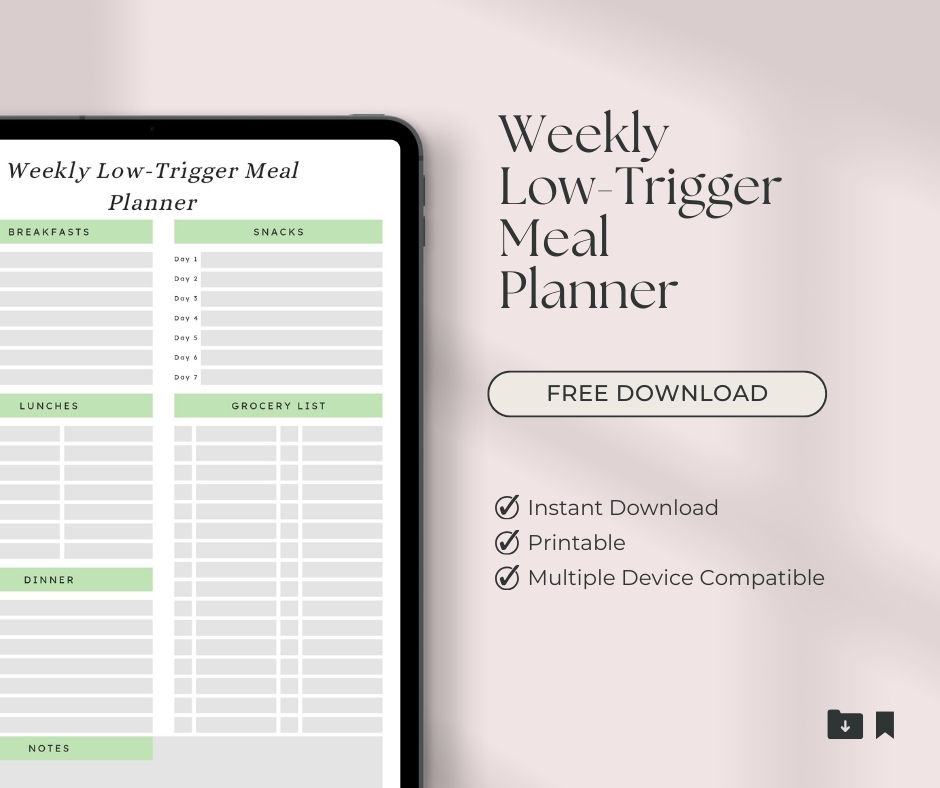
Free Planner: Track Your Low-Trigger Week
If you’d like a structured way to put this routine into practice and track which foods leave you bloated, we put together a printable 7-Day Low-Trigger Meal Planner.
Download the 7-Day Low-Trigger Gut Planner →
Final Tips for a Calmer, Less Bloated Stomach
- Keep meals simple, warm, and well-spaced
- Limit leftovers if histamine is a trigger
- Reduce constant snacking — give your gut rest windows
- Stick to still water
- Aim for routine over perfection — consistency over weeks matters more than getting any single day “right”
If you’ve followed a gentle routine like this for a few weeks and bloating is still severe or constant, please talk to a gastroenterologist. There are conditions (SIBO, gastroparesis, celiac disease, food allergies, gallbladder issues) that need proper testing — no amount of meal timing can replace a diagnosis when something more is going on.
Looking for More?
If you’re navigating MCAS or severe food reactivity specifically, we also have a more detailed 7-day meal plan designed for ultra-sensitive stomachs.