
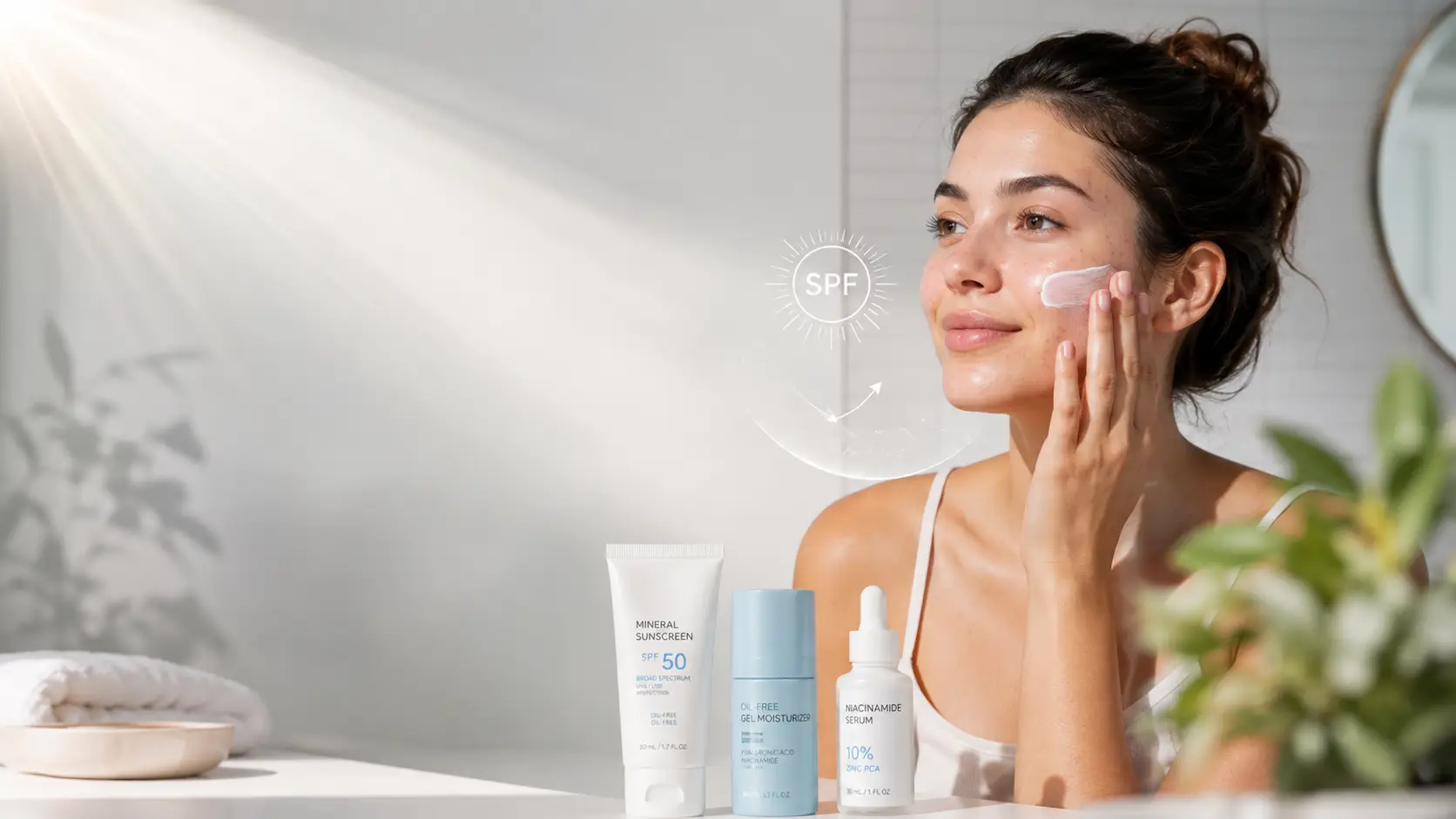
For anyone with breakout-prone skin, sunscreen can feel like a no-win situation: your dermatologist keeps insisting on it, yet the products you reach for tend to either clog your pores, leave a slick film, or burn alongside the actives already in your routine. Here’s the encouraging part — today’s sunscreen for acne-prone skin is far better than it used to be, and landing on one that performs isn’t down to chance. It comes from knowing which features to chase and which to steer clear of.
What follows is a thorough walkthrough of how to pick sunscreen for acne-prone skin that shields you without setting off breakouts — covering the underlying science, the ingredients that genuinely matter, and the recurring missteps that trap people in an endless loop of irritation and acne flares.
The short answer: Your best bet for acne-prone skin is a broad-spectrum SPF 30 or higher that’s non-comedogenic, oil-free, and fragrance-free. Mineral formulas built on non-nano zinc oxide tend to be the safest place to begin, since zinc has a mild anti-inflammatory action. Newer chemical filters such as Tinosorb suit combination skin nicely. Steer clear of rich plant oils, lanolin, isopropyl myristate, and denatured alcohol when they sit high on the ingredient list.
Why Acne-Prone Skin Needs SPF Even More Than Most
A frequent error people with acne make is dropping sunscreen altogether, convinced it’s what’s making their skin act up. In truth, it’s the reverse. Sun exposure makes both acne and its lingering marks much tougher to deal with. These are the reasons sunscreen for acne-prone skin is worth the effort:
- UV rays set off post-inflammatory hyperpigmentation. Each pimple that clears can leave a dark spot behind — and sun exposure with no protection keeps those marks hanging around weeks or even months longer than they otherwise would. It’s a big part of why people with acne so often also battle stubborn pigmentation that refuses to fade.
- UV wears down your skin barrier. When the barrier is weakened, it ramps up oil production to make up for it, so going without SPF can ironically turn oily skin even oilier and intensify breakouts.
- Active acne treatments leave your skin more vulnerable to the sun. Benzoyl peroxide, salicylic acid, retinoids, AHAs, and vitamin C every one of them heightens your skin’s sensitivity to UV. Skip daily SPF and you’re compounding the damage rather than safeguarding what those actives are accomplishing.
- UV-driven inflammation aggravates active acne. Time in the sun fuels inflammation, which can intensify cystic acne and spark fresh flares.
The American Academy of Dermatology flatly advises daily broad-spectrum SPF 30+ for everyone on acne medication — there’s no wiggle room.
Mineral vs Chemical Sunscreen for Acne-Prone Skin
Sunscreens split into two broad groups according to the way they defend your skin:
Mineral (physical) sunscreens
Mineral options rely on zinc oxide or titanium dioxide. These compounds rest on the surface of your skin and bounce UV light away. When it comes to acne-prone skin in particular, mineral formulas bring three benefits:
- Zinc oxide carries a mild anti-inflammatory effect. It can genuinely settle active breakouts and ease redness.
- They’re usually non-comedogenic. For most people, straight mineral filters won’t block pores.
- Sensitive, reactive skin tolerates them well. If redness or rosacea-style flushing tags along with your acne, mineral SPF is the kinder choice.
The downside: mineral sunscreens can cast a whitish tone, particularly on richer skin tones. Today’s tinted mineral SPFs handle this gracefully — the modest extra cost pays off for everyday use.
Chemical sunscreens
Chemical sunscreens take in UV rays and turn them into heat. Newer filters such as Tinosorb S, Tinosorb M, Mexoryl SX, and avobenzone agree with most skin types. They generally feel lighter, disappear into the skin, and layer well beneath makeup.
If your skin is acne-prone, opt for chemical sunscreens that are:
- Fragrance-free
- Without denatured alcohol high on the ingredient list
- Without oxybenzone (an older filter flagged for hormone-disruption concerns)
- Non-comedogenic (double-check against the ingredient list)
Comparison Table: Sunscreen Filters for Acne-Prone Skin
| Filter | Type | Acne-friendly? | Notes |
|---|---|---|---|
| Zinc oxide (non-nano) | Mineral | ★★★★★ | Mildly anti-inflammatory; gentle |
| Titanium dioxide | Mineral | ★★★★ | Even gentler than zinc; less UVA |
| Tinosorb S, Tinosorb M | Modern chemical | ★★★★ | Broad-spectrum; no white cast |
| Mexoryl SX, XL | Modern chemical | ★★★★ | Photostable; well-tolerated |
| Avobenzone | UVA chemical | ★★★ | Needs stabilization; pair with antioxidants |
| Octinoxate | Chemical | ★★ | Reef-toxic; potential hormone effects |
| Oxybenzone | Chemical | ★ | Often irritating; hormone-disruption concerns |
What to Look for in Sunscreen for Acne-Prone Skin
Green flags (acne-friendly)
- Non-comedogenic on the label (though confirm it yourself — the claim isn’t regulated; check our non-comedogenic moisturizer guide)
- Niacinamide — reinforces the barrier and helps keep oil in check
- Hyaluronic acid — delivers hydration without heaviness
- Allantoin, panthenol — calming for inflamed skin
- Antioxidants (vitamin E, green tea) — mop up free radicals generated by UV
- Matte finish for oily and combination skin
Red flags to scan for
- Isopropyl myristate, isopropyl palmitate, isopropyl isostearate — frequently comedogenic
- Coconut oil near the top of the ingredient list
- Lanolin — often pore-clogging and not vegan
- Cocoa butter and shea butter, at high concentrations
- Denatured alcohol sitting high on the list — stripping and irritating with everyday use
- Fragrance (parfum, “natural fragrance,” essential oils) — familiar contact irritants
How to Use Sunscreen for Acne-Prone Skin With Active Treatments
Application order makes a difference. If benzoyl peroxide, salicylic acid, or retinoids are part of your routine, stick to this order:
Morning
- Gentle cleanser
- Treatment serum (niacinamide, azelaic acid, vitamin C)
- Lightweight non-comedogenic moisturizer
- Broad-spectrum SPF 30+ — give it 1–2 minutes to settle
- Makeup (optional) — non-comedogenic only
Reapplication
The usual guidance is to reapply every couple of hours while you’re outside, but for typical office or indoor days, a single midday refresh does the job. Powder SPF formulas go over makeup without messing it up, and SPF setting sprays are another route.
Common Sunscreen Mistakes That Trigger Breakouts
1. Applying too little. Most people use under half the amount recommended, which leaves them with roughly half the protection. The benchmark for the face is about a quarter teaspoon — two finger-lengths of product.
2. Stacking SPF on top of a heavy moisturizer. Pairing a rich cream with a thick sunscreen tends to pill, fall apart, and leave your skin greasy before noon. Reach for a lightweight moisturizer instead.
3. Relying on “oil-free” claims by themselves. That label isn’t regulated. Plenty of “oil-free” sunscreens still pack comedogenic non-oil ingredients such as isopropyl myristate or heavy silicones.
4. Failing to take sunscreen off properly. A water-based cleanser on its own frequently leaves water-resistant SPF behind. Starting your evening double cleanse with a gentle oil cleanser helps — check our face wash guide.
5. Dropping SPF on overcast days. As much as 80% of UV rays make it through clouds. Daily SPF means every day, not only the sunny ones.
Vegan Sunscreen for Acne-Prone Skin: What to Avoid
The bulk of today’s UV filters are synthetic and vegan-friendly. What you really need to keep an eye on is everything else in the formula:
- Beeswax (cera alba) — swap for candelilla wax
- Lanolin — swap for shea butter (in small amounts) or sugarcane squalane
- Honey, royal jelly — occasionally slipped into “soothing” SPF blends
- Carmine — turns up only in tinted versions
- Animal-derived squalene — swap for squalane sourced from sugarcane
For more on putting together a vegan routine, see our vegan skin care line guide.
Best Sunscreen for Specific Acne Types
Hormonal acne
A non-comedogenic mineral sunscreen featuring niacinamide is the sweet spot. Hormonal acne tends to run inflammatory, and zinc oxide’s anti-inflammatory action helps quiet active breakouts. Layer a niacinamide serum beneath it.
Cystic acne
Go for a gentle mineral sunscreen with no fragrance, no essential oils, and no comedogenic emollients. Cystic acne is intensely inflammatory, so cut out every irritation trigger you can.
Comedonal acne (blackheads, whiteheads)
A lightweight gel or fluid sunscreen with niacinamide fits best. Newer chemical filters tend to perform nicely here. Skip heavy mineral formulas that may feel suffocating.
Adult acne with sensitivity
A tinted mineral SPF using non-nano zinc oxide. The tint screens out visible light, which can deepen post-inflammatory pigmentation, and the mineral filter ranks as the gentlest. See our sensitive skin guide.
Frequently Asked Questions About Sunscreen for Acne-Prone Skin
Does sunscreen lead to acne?
Only when you pick the wrong product. A non-comedogenic, oil-free sunscreen for acne-prone skin with suitable filters and ingredients won’t set off breakouts. In fact, the right SPF works in acne-prone skin’s favor by warding off post-breakout dark spots and defending your barrier. Seek out fragrance-free formulas that leave out isopropyl myristate, lanolin, and rich plant oils.
Mineral or chemical sunscreen — which is better for acne?
For the majority of acne-prone skin, mineral sunscreens with non-nano zinc oxide make the safer starting point — they’re gentler, mildly anti-inflammatory, and less prone to blocking pores. Newer chemical filters like Tinosorb do well on combination skin that can’t live with the white cast of mineral options. Stay away from older chemical filters such as oxybenzone.
Can I wear sunscreen alongside benzoyl peroxide or retinol?
It’s not merely okay — it’s essential. Both benzoyl peroxide and retinoids leave your skin considerably more reactive to the sun. Daily broad-spectrum SPF 30+ is a must when these actives are in play. Use your treatment in the evening, and finish your morning routine with sunscreen as the final step.
What’s the best sunscreen for body acne?
The same rules carry over: non-comedogenic, oil-free, fragrance-free, with mineral or modern chemical filters. Spray sunscreens often include alcohol that can aggravate body acne — a fluid mineral lotion is typically the smarter pick for backs, shoulders, and chests.
Does tinted sunscreen cause acne?
Today’s tinted sunscreens are usually formulated well for acne-prone skin, especially mineral tints carrying non-nano zinc oxide and iron oxides. The coloring pigments (iron oxides and titanium dioxide) are non-comedogenic. Keep an eye out for tinted formulas loaded with heavy emollients or fragrance — those can still set off breakouts.
How much sunscreen should go on my face?
Roughly a quarter teaspoon — about two finger-lengths of product. Most people apply less than half that, which sharply cuts the SPF protection they actually receive. Put it on as the last step of your skincare, give it two minutes to settle, then layer makeup if you want.
Is there a vegan sunscreen for acne-prone skin?
Yes — most current UV filters (both mineral and chemical) are synthetic and vegan-friendly. What you want to scan for is the supporting ingredients: avoid beeswax, lanolin, honey, animal-derived squalene, and carmine in tinted versions. Look for third-party certification from Leaping Bunny, The Vegan Society, or PETA.
The Bottom Line on Sunscreen for Acne-Prone Skin
Sunscreen for acne-prone skin comes down not to a brand name but to a formula that’s non-comedogenic, oil-free, fragrance-free, and built on filters that suit your skin type. For most acne-prone skin, that translates to a non-comedogenic mineral sunscreen with non-nano zinc oxide, or a fragrance-free modern chemical SPF if mineral white cast doesn’t agree with you. Use enough of it, top it up when you need to, and combine it with the right skincare actives — do that, and your acne treatment will deliver far more than it ever could without SPF.
Sources & Further Reading
- American Academy of Dermatology — Skin Care for Acne
- AAD — Sunscreen FAQs
- Niacinamide and Skin Barrier (Scientific Reports, 2025)
- FDA — Sunscreen Active Ingredients
Last updated: May 22, 2026. For informational purposes only — not a substitute for professional dermatological advice. Persistent or severe acne should be evaluated by a board-certified dermatologist.