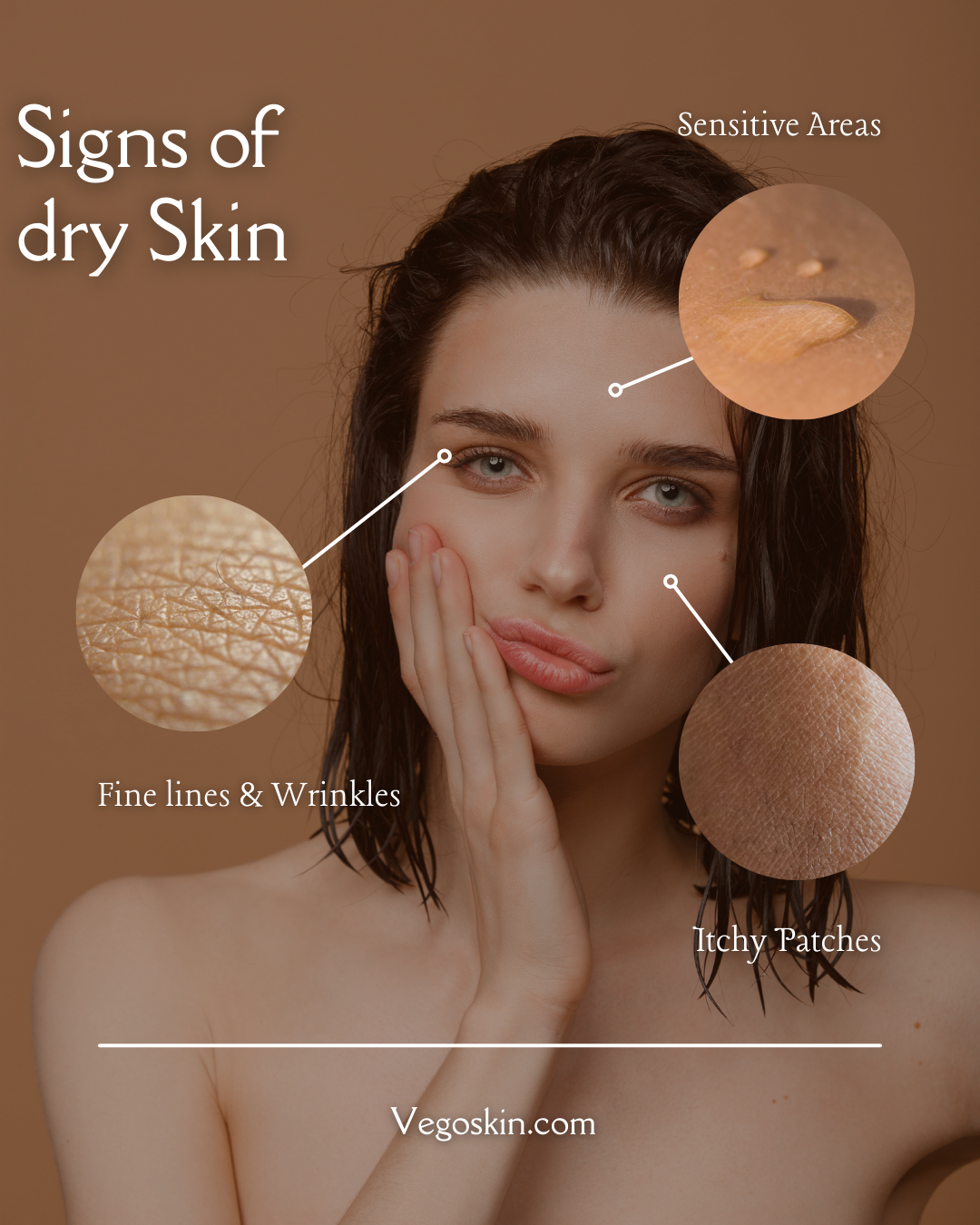

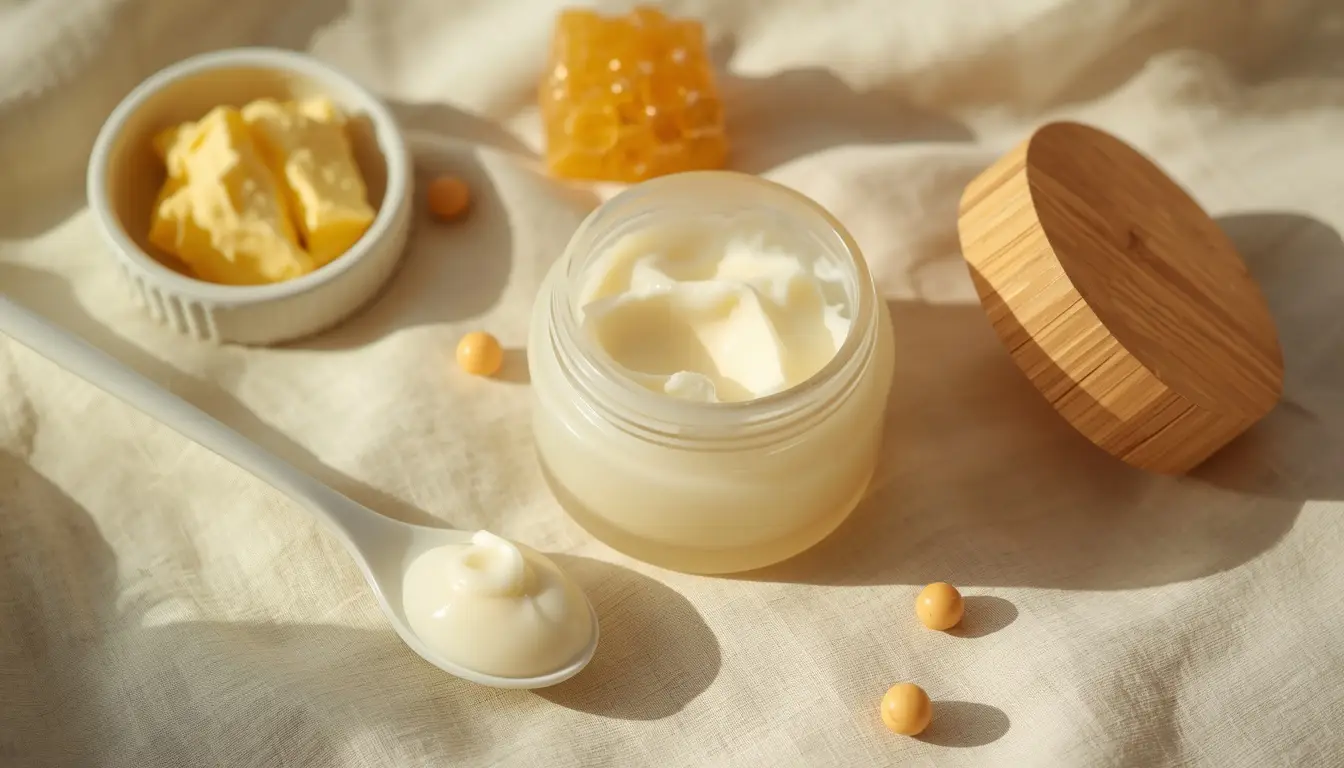
Dry skin isn’t just an annoyance — it’s a sign that your skin barrier is missing the lipids it needs to hold onto water. The right moisturizer doesn’t just sit on top of dry skin and feel nice for an hour. It rebuilds the barrier so your skin can hold its own moisture again, all day, without you constantly reapplying.
Here’s what dry skin actually is, what to look for in a moisturizer that addresses the underlying problem, and the ingredients that make a real difference for dry, dehydrated, or mature skin.
The short answer: The best moisturizer for dry skin combines three types of ingredients — humectants (like glycerin and hyaluronic acid) that pull water in, emollients (like squalane and ceramides) that fill the gaps between skin cells, and occlusives (like shea butter or petrolatum) that seal the moisture in. The right balance of all three rebuilds your skin barrier instead of just temporarily masking dryness.
Dry vs Dehydrated: Why It Matters
“Dry” and “dehydrated” sound interchangeable, but they’re different problems with different fixes:
- Dry skin is a skin type — your skin produces less natural oil (sebum) than average. It tends to be permanent, often genetic, and affects the whole face and body.
- Dehydrated skin is a temporary condition — your skin is missing water rather than oil. Even oily skin can be dehydrated, and the symptoms (tightness, fine lines that show up when you’re tired, dullness) can come and go.
Most people have a mix. The good news: a well-formulated moisturizer addresses both.
The Three Ingredient Categories That Actually Work
Humectants — pull water in
Humectants are water-attracting molecules. They draw moisture from the deeper layers of your skin (and from the air, in humid environments) up to the surface where it can be sealed in. The best ones for dry skin:
- Glycerin — the gold standard, well-tolerated by virtually everyone
- Hyaluronic acid (sodium hyaluronate) — holds many times its weight in water
- Panthenol (vitamin B5) — humectant + soothing
- Urea (5-10%) — doubles as a mild exfoliant for very dry, flaky skin
- Niacinamide — supports the barrier while drawing in water (more on this below)
Emollients — fill the gaps
Emollients are the lipids that fit between your skin cells, smoothing out roughness and restoring the brick-and-mortar structure of your skin barrier. The most effective emollients for dry skin:
- Ceramides (NP, AP, EOP) — your skin’s own barrier lipids, replaced topically
- Cholesterol — works alongside ceramides; usually listed in well-formulated barrier creams
- Fatty acids (linoleic acid, linolenic acid) — the third pillar of your skin’s lipid matrix
- Squalane (sugarcane- or olive-derived) — lightweight, mimics natural sebum
- Shea butter, mango butter — richer, ideal for very dry or mature skin
Occlusives — seal it in
Occlusives form a barrier on top of your skin to prevent water from evaporating. They’re the final step in any moisturizer formulation. The most effective:
- Petrolatum — the most occlusive ingredient available; despite its reputation, it’s non-comedogenic and well-tolerated
- Mineral oil (USP grade) — second to petrolatum; refined and stable
- Plant butters (shea, mango, cocoa) — vegan-friendly alternatives
- Plant waxes (candelilla, carnauba, sunflower) — vegan substitutes for beeswax
- Dimethicone — silicone-based; lighter than petrolatum but still effective
Comparison Table — What to Look for in a Dry Skin Moisturizer
| Ingredient | Type | What it does | Best for |
|---|---|---|---|
| Glycerin | Humectant | Pulls water into upper skin layers | Everyone |
| Hyaluronic acid | Humectant | Hydration; fine lines | Dehydrated, mature skin |
| Niacinamide | Humectant + barrier | Barrier support, water retention | All skin types |
| Ceramides (NP, AP, EOP) | Emollient + barrier | Replaces missing lipids | Very dry, mature, eczema-prone |
| Cholesterol | Emollient + barrier | Pairs with ceramides | Mature, compromised skin |
| Squalane (sugarcane) | Emollient | Lightweight skin-mimicking oil | All skin types incl. acne-prone |
| Shea butter, mango butter | Emollient + occlusive | Rich seal for dry skin | Very dry, body skin |
| Petrolatum | Occlusive | Strongest moisture seal | Severely dry, recovering skin |
| Dimethicone | Occlusive | Lighter seal; smooths texture | Combination dry skin |
What the Research Actually Shows
The case for ceramide-rich moisturizers is strong. A 2024 randomized controlled trial in the Journal of Cosmetic Dermatology found that a moisturizer containing ceramides and niacinamide significantly improved skin tolerability when paired with topical acne treatment — supporting the idea that ceramide-based moisturizers help compromised skin recover and tolerate active ingredients.
For niacinamide specifically, a 2025 study published in Scientific Reports showed that niacinamide enhances the stratum corneum’s water uptake at high humidity and acts as a plasticizer at low humidity — meaning it helps your skin hold onto water more efficiently in different climates. That’s a particularly useful trait for dry skin in winter or air-conditioned environments.
Matching a Moisturizer to Your Skin’s Needs
Dry skin (year-round)
A rich cream or balm with ceramides + cholesterol + glycerin + shea butter + a small percentage of petrolatum or dimethicone at the end. Apply on slightly damp skin to lock moisture in.
Dehydrated skin (sometimes oily)
A lightweight gel-cream with hyaluronic acid + niacinamide + glycerin. Skip the heavy occlusives. Apply more frequently rather than thicker.
Mature dry skin
A barrier cream with ceramides + cholesterol + fatty acids + peptides + a richer emollient base. Look for added antioxidants (vitamin E, vitamin C) and consider layering a facial oil on top at night.
Eczema-prone or compromised skin
A simple ceramide cream with minimal added ingredients. Avoid fragrance, essential oils, and high-percentage actives. See our sensitive skin guide for more.
Dry, acne-prone skin
A non-comedogenic cream with ceramides + niacinamide + glycerin + sugarcane squalane. Skip cocoa butter, shea butter in high concentrations, and lanolin. See our non-comedogenic moisturizer guide.
How to Apply Moisturizer for Maximum Effect
- Apply to slightly damp skin. Most moisturizers work better on skin that’s just been rinsed or misted — humectants need water to draw in.
- Press, don’t rub. Gently press the cream into your skin rather than dragging it across.
- Apply within 60 seconds of cleansing. Your skin loses water fast right after a wash; sealing it quickly preserves the hydration.
- Use a heavier cream at night. Your skin loses more water overnight (see our nighttime skincare routine guide) — a richer formula compensates.
- Layer a facial oil over a moisturizer if your skin is very dry. The oil acts as a final occlusive seal. Squalane or rosehip oil work well for the face.
Vegan Considerations
The most common animal-derived ingredients in conventional dry-skin moisturizers:
- Lanolin — sheep wool grease; replace with shea butter or sugarcane squalane
- Beeswax (cera alba) — replace with candelilla wax, sunflower wax, or carnauba wax
- Honey, royal jelly — added for “soothing” claims; use panthenol or oat instead
- Bovine collagen — common in “firming” creams; use peptides + niacinamide instead
- Shark squalene — replace with squalane from sugarcane (same molecule, plant-derived)
For more on building a fully vegan routine, see our vegan skin care line guide.
5 Common Mistakes
1. Using a heavier moisturizer when a humectant would do. Dehydrated skin needs water, not just more oil. A rich cream over dehydrated skin can feel suffocating without actually addressing the issue.
2. Skipping moisturizer because skin “feels oily.” If your skin is dehydrated and overcompensating with oil, skipping moisturizer makes it worse, not better.
3. Applying too much. A pea-sized amount for your face is enough. More than that won’t absorb — it’ll just sit on top.
4. Trusting “for dry skin” labeling without reading ingredients. The label is unregulated. Many products marketed for dry skin are heavy on fragrance and light on the ingredients that actually work.
5. Ignoring SPF. Dry skin shows photoaging faster than oily skin because there’s less natural lipid protection. Daily broad-spectrum SPF 30+ is non-negotiable — see our sun protection guide.
Frequently Asked Questions
What’s the best ingredient for dry skin?
There isn’t one — the best moisturizers for dry skin combine humectants (glycerin, hyaluronic acid), emollients (ceramides, squalane), and occlusives (shea butter, petrolatum). A formula with all three categories rebuilds the barrier and seals in moisture, while a single-ingredient approach typically falls short.
Is hyaluronic acid enough for dry skin?
Not on its own. Hyaluronic acid is a humectant — it pulls water in, but you also need an emollient to fill the gaps in your barrier and an occlusive to seal everything in. Apply it on damp skin and follow with a ceramide cream to get the full benefit.
Are facial oils better than moisturizer for dry skin?
No — they serve a different job. Oils don’t hydrate; they seal. Used on dry skin without water underneath, an oil sits on the surface without delivering any moisture. The right approach: hyaluronic acid serum on damp skin, ceramide moisturizer to seal, then a few drops of facial oil if your skin is very dry.
Can I use a body lotion on my face?
Generally no — body lotions are formulated with heavier occlusives and sometimes higher fragrance loads that can clog facial pores or trigger irritation. The skin on your face is thinner and more reactive than body skin. Use a face-specific moisturizer.
How often should I moisturize dry skin?
Twice a day for most people — morning and evening. Very dry skin or harsh climates may benefit from a midday application of a humectant serum or hydrating mist, sealed with a small amount of occlusive. Don’t skip moisturizer because your skin “feels oily” — that often means it’s dehydrated.
Is petrolatum bad for skin?
No, despite the reputation. Petrolatum (Vaseline) is one of the most studied occlusive ingredients in dermatology. It’s non-comedogenic, well-tolerated, and dermatologists frequently recommend it for severely dry or compromised skin. The “purified” cosmetic-grade version is safe; concerns about industrial-grade impurities don’t apply to skincare formulations.
The Bottom Line
The best dry skin moisturizer is one that combines all three categories — humectants to pull water in, emollients to fill the gaps in your barrier, and occlusives to seal everything in. Look for ceramides + cholesterol + niacinamide + glycerin + a plant butter or dimethicone. Apply on slightly damp skin, twice daily, and don’t skip the morning SPF.
Sources & Further Reading
- Niacinamide and Stratum Corneum Hydration (Scientific Reports, 2025)
- Ceramide-and-niacinamide moisturizer (J Cosmet Dermatol, 2024)
- American Academy of Dermatology — How to Treat Dry Skin
- AAD — Atopic Dermatitis & Barrier Repair
Last updated: May 6, 2026. For informational purposes only — not a substitute for professional dermatological advice. Persistent or severe dryness, itching, or flaking warrants evaluation by a board-certified dermatologist.