


You wake up looking like you swallowed a basketball overnight. Or it’s the post-lunch slump where your jeans suddenly feel like punishment and you just want to lie flat on the couch. Bloating is sneaky like that — it doesn’t just ruin your outfit, it eats into your energy and your confidence too.
The frustrating part is that bloating is rarely random. There’s usually a pattern. The food, the timing, the combination, the stress level — somewhere in there is the trigger, and most people are just one week of honest tracking away from finding it.
This guide walks you through a simple 7-day gut tracker that turns vague suspicions (“I think dairy bothers me?”) into clear answers. No fancy app required, no restrictive diet, no expensive testing. Just a notebook, a week of attention, and a real plan.
Quick note: if your bloating is severe, comes with pain, blood in stool, unexplained weight loss, or any allergy symptoms (throat tightness, hives), please see a doctor before tracking. Conditions like SIBO, celiac, IBD, and food allergies need medical diagnosis, not just observation.
What Actually Causes Bloating
Bloating happens when your digestive system gets overwhelmed — by too much air, too much fluid, or food it can’t process well. The common drivers:
- Swallowed air from eating fast, drinking through straws, or chewing gum.
- Fermentation in the colon when undigested carbs reach gut bacteria, which produce gas as a byproduct. This is the mechanism behind most FODMAP-related bloating.
- Food intolerances — lactose, fructose, fructans (onion, garlic, wheat), polyols (apples, pears, stone fruit). Unlike allergies, intolerances are slow, subtle, and dose-dependent.
- Slow motility from stress, hormones, or lying down right after meals.
- Gut microbiome shifts, where the balance of bacteria itself contributes to gas production.
The Mayo Clinic notes that food intolerances and changes in gut bacteria are common culprits behind persistent bloating and gas.
Here’s the catch that makes generic advice fail: triggers are deeply personal. What bloats your best friend may be completely fine for you. That’s why a personalized tracker beats any “top 10 worst foods” list.
Why Tracking Beats Guessing
Most of us eat on autopilot. Breakfast is whatever’s quick, lunch is whatever’s convenient, dinner is whatever sounded good two hours ago. We rarely connect the mid-morning latte with the 3pm bloat, or the late dinner with the next-day swelling.
A tracker turns your meals into data. You log what you ate, when, and how you felt, alongside the other factors (sleep, stress, movement) that affect digestion. Within a few days, patterns surface that were invisible before — “every time I have toast for breakfast I’m bloated by noon” or “afternoon apple with peanut butter = evening gas.”
Once you spot the pattern, you can test it: remove the suspect food briefly, see if symptoms ease, then reintroduce and see if they return. That’s how you confirm a real trigger versus a coincidence.
Tracking also helps you rule things out. Sometimes it’s not the food itself — it’s the portion size, the timing, or the combination with something else. Seven days of honest notes give you clarity that months of guessing never could.
How the 7-Day Gut Tracker Works
Each day, record four things:
- Meals and snacks: what, how much, and when.
- Symptoms: rate bloating 1–10, plus any gas, cramps, energy dips, or bathroom changes.
- Timing: how long after eating symptoms appeared.
- Lifestyle: sleep quality, stress level, exercise, water intake.
The goal isn’t to restrict everything — it’s to eat as normally as possible while keeping detailed notes. By Day 7 you’ll have enough information to spot personal trigger patterns and start making targeted changes.
Day-by-Day Walkthrough
Day 1: Establish Your Baseline
Eat as you normally would. The only difference: write everything down. Every meal, snack, drink. Note the exact time and how you feel two hours later. Rate bloating in the morning, afternoon, and evening. This is your reference point — many people are surprised what they notice just from honestly logging one full day.
Day 2: Zoom in on Mornings
Focus on breakfast and mid-morning. Coffee with cream? Toast with butter? Smoothie? Log specifics — type of bread, type of milk, fruit choices. Did bloating kick in before lunch? Track your water intake and whether you ate quickly or slowly. Compare to Day 1.
Day 3: Lunch and Midday
Shift attention to lunch and afternoon snacks. Eating on the go? Big salad with beans and onions? Sandwich with deli meat? Log every component, including dressings and condiments. Note energy by 4pm — bloating and fatigue often travel together. Tonight, scan all three days for foods showing up before symptoms.
Day 4: Dinner and Evening
Evening meals tend to be bigger and eaten later, which slows overnight digestion. Log dinner ingredients carefully — sauces, sides, wine, dessert. Note timing relative to bed, and how your stomach feels first thing Day 5. Many people find late carbs or fatty dinners are major culprits because the gut slows during sleep.
Day 5: Test One Suspect
By now you likely have one or two foods in mind. Today, eat a normal portion of one suspect (say, dairy or bread) while keeping everything else the same. Log carefully. If bloating spikes versus your baseline days, you’ve got real evidence.
Day 6: Try Different Combinations
Pair foods differently. If you usually eat beans with rice, try them separately. Swap a usual snack for something new. The question is whether certain combinations cause more trouble than single foods.
Day 7: Review and Plan
Eat normally and spend extra time reviewing the week. Look for repeating patterns — specific ingredients, meal times, or combinations consistently linked to bloating. Pick your top three suspects and write short summaries: “Dairy after 2pm = 7/10 bloating every time.” That’s your personal map.
Want a Printable Tracker?
If you’d rather not improvise the format, we built a printable 7-day tracker with daily pages already laid out for meals, symptoms, timing, and lifestyle factors:
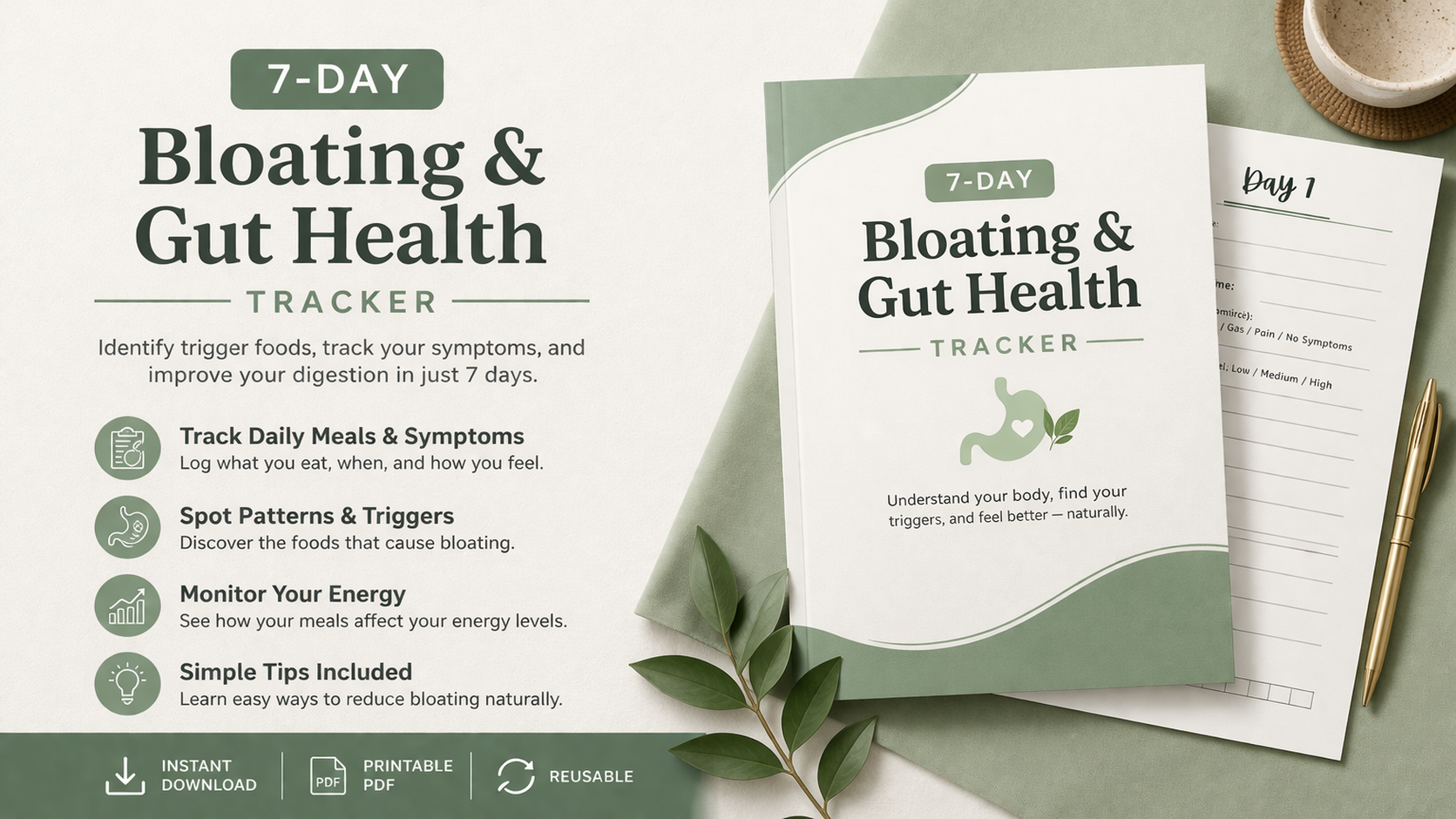
Get the 7-Day Bloating & Gut Health Tracker →
Common Trigger Foods to Watch For
Everyone’s different, but these foods come up repeatedly in bloating stories:
- Dairy — lactose is tough for many adults. Milk, cheese, ice cream often cause delayed gas and bloating.
- Wheat and other gluten grains — even without celiac, non-celiac gluten or wheat sensitivity is real for some people.
- Beans and lentils — high in oligosaccharides that ferment readily. Nutritious long-term, gas-producing short-term.
- Cruciferous vegetables — broccoli, cauliflower, cabbage, Brussels sprouts contain raffinose, another gas-producing sugar.
- Onions and garlic — contain fructans, a top FODMAP trigger.
- Carbonated drinks — the CO₂ literally adds gas to your system.
- Sugar alcohols — sorbitol, xylitol, erythritol in sugar-free gum, candies, and protein bars pull water into the intestines and ferment.
- Apples, pears, and stone fruit — high in fructose and polyols, which can overwhelm digestion in larger amounts.
The NHS food intolerance guide covers the typical symptom patterns and what to watch for.
Simple Habits That Reduce Bloating While You Track
- Chew slowly. Put your fork down between bites. Reduces swallowed air and gives your stomach time to register fullness.
- Sip water throughout the day rather than gulping large amounts with meals.
- Walk for 10 minutes after dinner. Light movement noticeably speeds gastric emptying.
- Try peppermint or ginger tea. Both have evidence for calming the digestive tract (skip peppermint if you have reflux).
- Eat dinner 3–4 hours before bed so your stomach can empty before you lie down.
- Manage stress. Even three slow breaths before eating switches your nervous system into “rest and digest” mode and changes how your gut handles the meal.
Harvard Health has a practical overview of bloating relief that lines up with most of these habits.
You’ve Got Real Answers Now
At the end of the week you’ll have something you didn’t have before: data. Real, specific data about how your own body responds to your own food. That’s worth more than any generic “best foods for gut health” list.
Start small with what you find. Cut back on the clearest trigger, give it two weeks, and see how you feel. Keep the tracker going if you want sharper data, or run it again with a different focus (stress versus food, for example).
If you’ve done a full week of careful tracking and you can’t pin down a pattern, or if symptoms are severe and ongoing, please see a gastroenterologist. A tracker is a powerful first step, but it doesn’t replace medical testing for conditions like SIBO, celiac, IBD, or true food allergies.
Here’s to lighter days ahead.

