

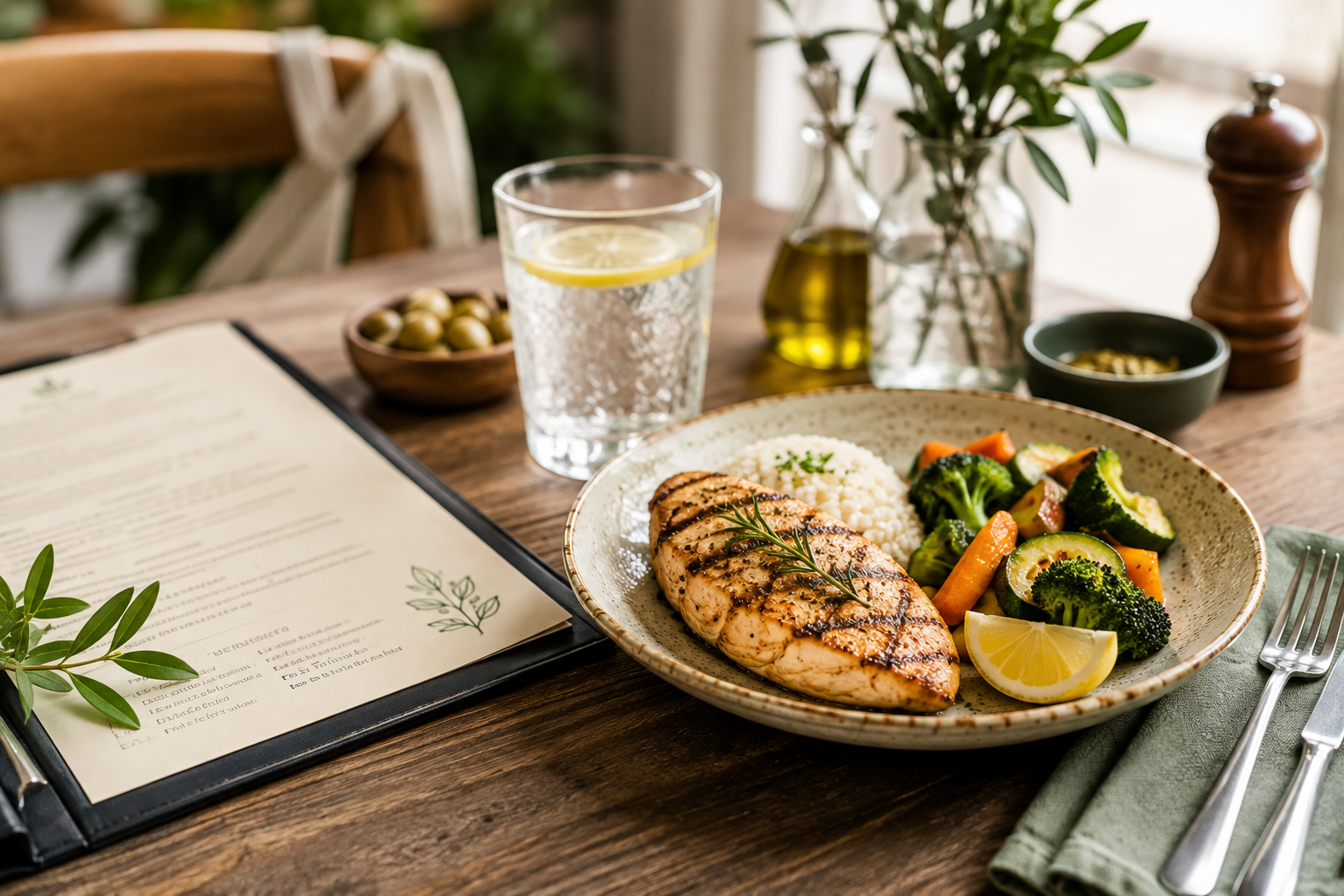
If you’re navigating eating out with IBS, MCAS, or general food sensitivities, you know it can feel less like a treat and more like a gamble.
I still remember one dinner out that summed up everything wrong with “just wing it” ordering. I’d had a good week, so I let my guard down and ordered the pasta special without asking a single question. Twenty minutes later, I was smiling through gritted teeth while my stomach cramped, silently counting down the minutes until I could leave. That night was when I stopped treating “eating out” as a fixed menu with no control, and started treating it as a conversation I get to steer.
If you live with IBS, MCAS, or general food sensitivities, you’ve probably had a version of that same night. One wrong dish and you’re bloated for two days, doubled over in the bathroom, or reaching for antihistamines before dessert even arrives. Maybe you’ve started dreading dinner invitations, scanning menus in a panic, or quietly ordering “just a side salad” because it feels like the only safe option.
Why restaurant meals are riskier in the first place
You’re not imagining it, and you’re not being overly sensitive. Restaurant food is genuinely harder to control than home cooking; you don’t know exactly what’s in the sauce, how long the dish has been sitting, or whether “a little garlic” actually means a whole clove blended into the base of everything on the menu.
The good news is that you don’t have to avoid restaurants forever. You need a simple system: what to check before you go, what to ask when you get there, and which patterns to watch for on any menu, anywhere in the world. Here’s a deeper look at how to build that system the exact one I use every time I sit down at a table that isn’t my own kitchen.
Eating Out with IBS: Why It’s Riskier in the First Place
A few things make eating out with IBS fundamentally different from cooking at home:
- You can’t see the ingredient list. Garlic, onion, dairy, and seed oils are often blended into sauces, marinades, and stocks long before the dish reaches your table.
- Portions and freshness vary. A curry made fresh to order behaves very differently in your body than the same curry that’s been simmering and building histamine since that morning.
- Kitchens optimise for flavour, not tolerance. Chefs reach for garlic, onion, butter, and cream because they make food taste better, not because they’re thinking about anyone’s gut.
- You’re often eating faster, later, or more stressed than usual, and stress itself can lower your tolerance threshold, especially with MCAS.
None of this means restaurants are off-limits. It just means the odds are stacked slightly against you unless you know what to look for.
1. Favour simple words over fancy ones
Menus are written to sound appealing, not to disclose ingredients. As a general rule: the more adjectives a dish has, the more hidden triggers it probably contains.
Look for words like grilled, steamed, roasted, poached, or plain. Be more cautious with words like creamy, crispy, glazed, buttery, house sauce, signature dressing, or chef’s blend; these almost always signal dairy, garlic, onion, or a sauce you didn’t ask for. A “simple grilled salmon” is usually exactly what it sounds like. A “pan-seared salmon with our signature herb butter” is a different dish entirely, even though the fish itself might be identical. I’ve learned to read menus almost like a contract now; every extra adjective is a clause I need to double-check.
2. Sauces and dressings are the #1 hidden trigger
Even a perfectly simple grilled chicken breast can turn into a flare if it’s brushed with a garlic-butter glaze or served over a creamy sauce. The safest habit you can build is asking for any sauce or dressing on the side — every single time, no exceptions. This alone solves a huge percentage of “I didn’t know what was in it” reactions, because it lets you control exactly how much (if any) actually touches your food.
This applies to salad dressings, dipping sauces, marinades, and even things like ketchup or mayo at fast food spots, which frequently contain onion or garlic powder as a flavour base.
3. Don’t be afraid to ask your server
Most kitchens are far more used to modification requests than you’d think. A simple:
“I have a sensitive stomach — could this come without garlic and onion?” “Is this cooked in butter or oil?” “Could I get the sauce on the side, please?”
…are completely normal things to ask, and most restaurants can accommodate at least one of them. You are not being difficult, high-maintenance, or a nuisance table. You are giving yourself a fair shot at actually enjoying your meal instead of paying for it later, literally and physically. It took me a long time to say these sentences out loud without feeling embarrassed. Now I say them without a second thought, because I know exactly which version of the evening I’d rather have.
If you’re anxious about asking in the moment, it can help to call ahead earlier in the day. A two-minute phone call gives the kitchen time to think it through, rather than putting a server on the spot during a busy dinner rush.
4. Some cuisines are naturally easier than others
Grilled proteins, plain rice, and steamed vegetables the kind of food you’ll find at most Japanese restaurants, Mexican grills, or simple steakhouses tend to be much safer defaults than dishes built on garlic-onion-cream bases, which show up constantly in Indian curries, Italian pasta sauces, French cooking, and most Chinese stir-fries.
That doesn’t mean those cuisines are permanently off-limits; plenty of Indian restaurants can make a plain tandoori dish without the masala base if you ask directly, and plenty of Italian places will happily do olive oil and grilled chicken over pasta instead of a cream sauce. It just means you’ll usually need to ask a few more questions before ordering, and it helps to already know which dishes on that type of menu are most likely to be adaptable.
5. Watch out for “healthy-sounding” traps
This one catches people off guard constantly. Words like fresh, homemade, and artisanal sound reassuring, but they say nothing about what’s actually in the dish. A “fresh” hummus is still made from garlic and chickpeas. A “homemade” dressing is still likely to contain onion powder. Don’t let a health-halo word replace an actual question about ingredients.
Similarly, “vegetarian” or “vegan” doesn’t automatically mean low-FODMAP or low-histamine plant-based menus often lean even more heavily on garlic, onion, legumes, and fermented ingredients to build flavour without meat.
6. Plan for the histamine angle, not just FODMAPs
If MCAS or histamine intolerance is part of your picture, freshness matters just as much as ingredients. Histamine builds up in food the longer it sits, ferments, or ages, so a freshly grilled piece of fish is usually safer than the same fish in a slow-simmered stew that’s been sitting since the lunch service. Aged cheeses, cured meats, wine, and fermented sauces (soy sauce, fish sauce, balsamic vinegar) are also worth extra caution.
7. Arrive with a plan, not an empty stomach
Two small habits make a bigger difference than people expect:
- Look at the menu online before you go, so you’re choosing calmly instead of scanning under pressure at the table with a server waiting.
- Eat a small, safe snack beforehand if you know you’ll be hungry. Arriving starving makes it much harder to say no to a risky dish, because your body is prioritising “eat something now” over “eat something safe.”
8. If symptoms do start, don’t panic
Stop eating, sip water slowly, take your usual rescue medication if you have one, and try to sit somewhere calm for 20–30 minutes. Most flares settle faster when your body isn’t also dealing with stress and adrenaline on top of the reaction itself. Panicking about a flare tends to make the physical symptoms feel worse, even though it’s a completely understandable reaction to have. I still have to remind myself of this mid-flare: the calmer I can stay, the faster it usually passes.
A quick mental checklist for any menu
Before you order, run through these three questions:
- Is this dish described simply, or does it have several rich/creamy/glazed-style words attached?
- Can the sauce, dressing, or marinade be served on the side or left off entirely?
- Is this freshly prepared, or does it sound like something that’s been sitting, simmering, or fermenting?
If you can answer those three comfortably, you’ve already dramatically reduced your risk before the food even arrives.
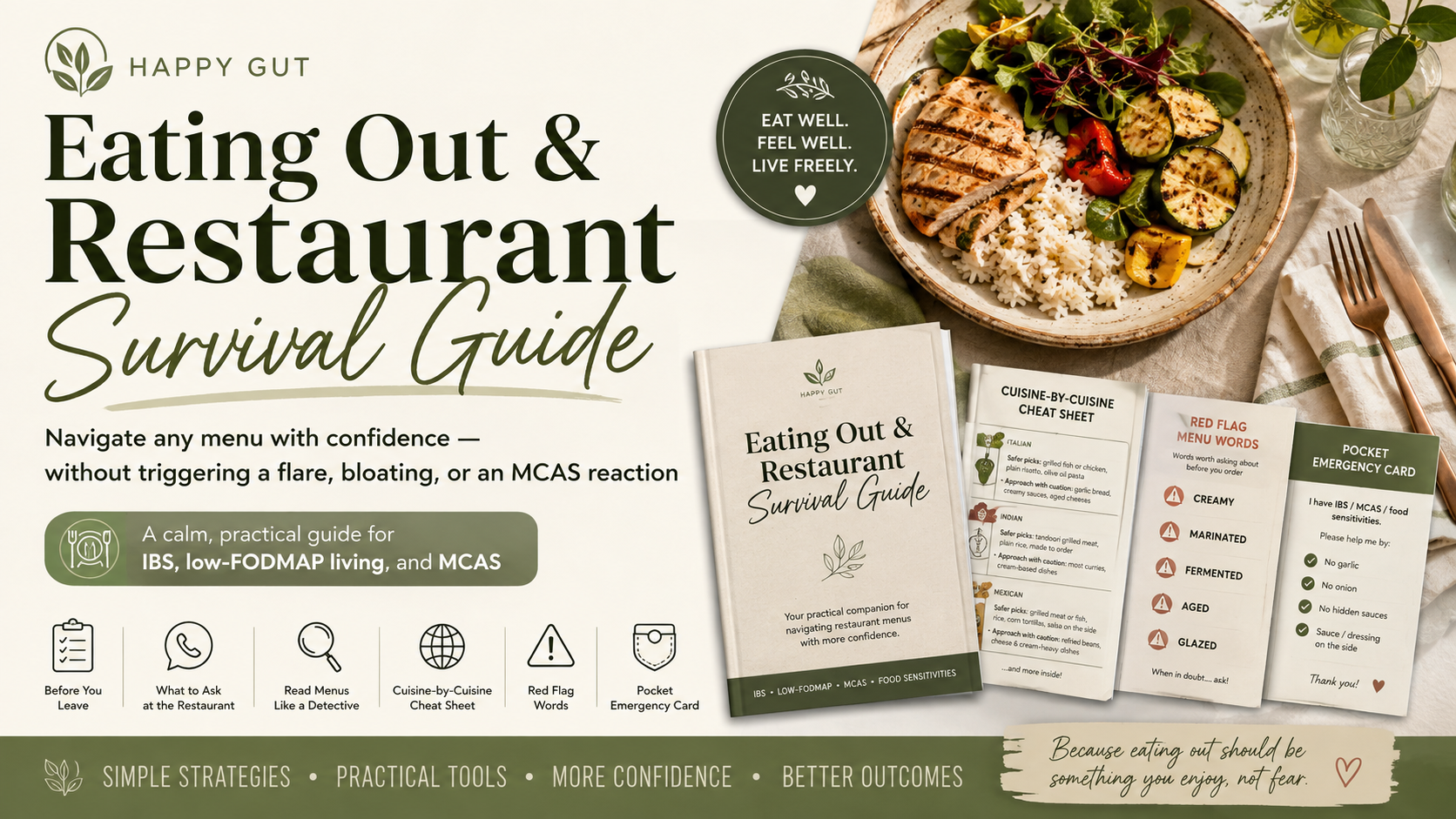
These habits will already make a real difference, but they only scratch the surface of what actually helps once you’re sitting at a table with a menu in your hands. I built the fuller version of this system after enough trial and error (and enough ruined evenings) to know exactly which questions matter and which ones don’t. For a complete, printable system (including a full cuisine-by-cuisine cheat sheet covering Italian, Indian, Chinese, Mexican, Japanese, and fast food menus, a longer list of red-flag menu words, MCAS-specific guidance, and a pocket emergency card you can screenshot for the moment you’re stuck with no time to think), I put everything together in one guide.
👉 Get the full Eating Out & Restaurant Survival here :
You deserve to enjoy a meal out without the fear. I promise, once you have the system down, it stops feeling like a gamble and starts feeling like second nature.

