
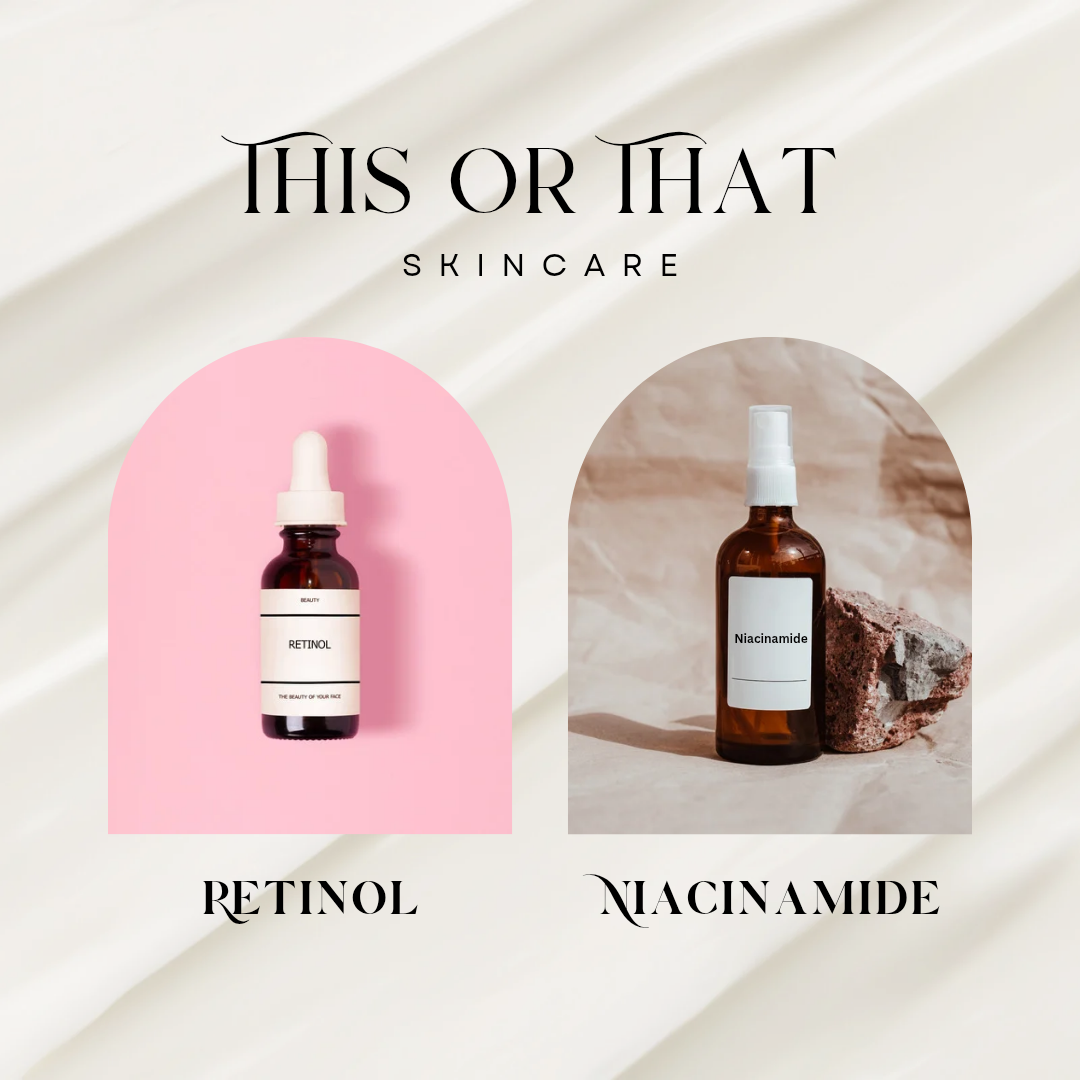
Skincare can feel like navigating a maze, with endless products promising miraculous results. Two ingredients consistently steal the spotlight: niacinamide and retinol. Both are genuinely effective and well-studied — but do you need both in your routine, and can you actually use them together? Let’s break down what each does, whether they conflict, and how to layer them without irritation.
What Niacinamide Does
Niacinamide is a form of vitamin B3, found in serums, moisturizers, and cleansers, typically at 2–10%. It’s one of the most versatile and best-tolerated active ingredients in skincare. The evidence supports several benefits:
- Brightening — reduces hyperpigmentation by limiting melanin transfer, fading dark spots and evening tone.
- Calming redness — anti-inflammatory, which makes it good for sensitive or acne-prone skin.
- Oil control — helps regulate sebum production, reducing shine and congestion.
- Barrier support — strengthens the skin barrier and supports ceramide production.
Because it’s gentle and plays well with almost everything, niacinamide is a low-risk addition to most routines. Look for around 5% for noticeable results; concentrations above 10% offer diminishing returns and can occasionally cause mild stinging.
What Retinol Does
Retinol is a derivative of vitamin A and the gold standard in anti-aging skincare. It belongs to the retinoid family, which ranges from over-the-counter retinol to prescription tretinoin. Retinol works by accelerating cell turnover and stimulating collagen production. Its well-documented benefits:
- Reduces fine lines and wrinkles by boosting collagen and elastin.
- Fades dark spots through faster cell turnover.
- Clears acne by unclogging pores and normalizing skin cell shedding — a favorite for acne-prone skin.
- Refines texture and minimizes the appearance of enlarged pores.
The downside: retinol can cause irritation, dryness, and peeling, especially for beginners. Start with a low concentration (0.1–0.3%) used 2–3 times a week and build up as your skin adapts. Avoid during pregnancy and breastfeeding.
Can You Use Niacinamide and Retinol Together?
Yes — and this is where a persistent myth needs clearing up. You’ll still see claims that niacinamide “cancels out” retinol. This comes from old, lab-based research that doesn’t reflect how modern formulations work on actual skin. Current understanding is that the two work well together.
In fact, they’re complementary. Niacinamide’s soothing, barrier-strengthening properties counteract retinol’s tendency to irritate — which makes the combination especially useful for people who find retinol too harsh on its own. Meanwhile, retinol’s collagen-boosting and resurfacing effects pair nicely with niacinamide’s brightening and oil-regulating benefits, letting you address multiple concerns at once.
How to Layer Them Safely
1. Cleanse first
Start with a gentle, pH-balanced cleanser on a clean face for better absorption. Cetaphil Gentle Skin Cleanser and CeraVe Hydrating Cleanser are reliable, non-irritating options.
2. Apply niacinamide
Niacinamide is flexible — morning or night. Apply a niacinamide serum (The Ordinary Niacinamide 10% + Zinc 1% is a popular, affordable choice) to slightly damp skin, a few drops gently patted in. If you use it in the morning, follow with moisturizer and SPF.
3. Apply retinol at night
Retinol is best at night because it’s photosensitive. After cleansing (and niacinamide, if layering), let your skin dry for a few minutes — retinol works best on dry skin and is less irritating that way. Apply a pea-sized amount of a low-strength retinol, starting 2–3 nights a week.
4. The “sandwich” method
To minimize dryness, you can apply moisturizer, then retinol, then more moisturizer. Buffering retinol between moisturizer layers reduces irritation while you build tolerance. A ceramide-rich night cream (like CeraVe PM, which also contains niacinamide) works well.
5. Alternate if your skin is sensitive
If layering causes irritation, simply separate them: niacinamide in the morning, retinol at night. You still get both benefits with less risk.
6. Sunscreen is non-negotiable
Retinol increases sun sensitivity, so daily broad-spectrum SPF 30+ is essential — every morning, reapplied if you’re outdoors.
Who Actually Benefits From Both?
Whether you need both depends on your concerns:
- Acne-prone skin — retinol unclogs pores, niacinamide reduces oil and inflammation. Strong combination for active acne and post-acne marks.
- Aging skin — retinol’s collagen boost plus niacinamide’s brightening and firming.
- Hyperpigmentation — both fade dark spots through different mechanisms, so they stack well.
- Sensitive skin — niacinamide makes retinol more tolerable; start low and alternate.
- Oily skin — niacinamide controls shine, retinol refines pores.
- Dry skin — both work if you prioritize hydration to offset retinol’s drying effect.
If you’re only targeting one concern, or your skin is very reactive, it’s perfectly fine to start with one ingredient and add the other later. You don’t need a maximal routine to see results.
Managing Side Effects
- Retinol irritation (redness, peeling, dryness) — use it sparingly at first, moisturize well, and don’t combine it with AHAs/BHAs or vitamin C on the same night.
- Niacinamide sensitivity — rare, but high concentrations can cause mild stinging. Drop to 5% if so.
- Overloading — introducing too many actives at once overwhelms skin. Add one at a time, a couple of weeks apart, and avoid stacking with benzoyl peroxide unless a dermatologist advises it.
If irritation persists, see a dermatologist or consider bakuchiol, a gentler plant-derived alternative to retinol with some supporting evidence.
Quick Myth-Busting
- “They cancel each other out.” Outdated. Modern formulations let them work together.
- “You can’t use them with vitamin C.” You can — just at different times. Vitamin C in the morning, retinol at night.
- “They’re only for aging skin.” Both help acne, pigmentation, and texture at any age.
The Bottom Line
Niacinamide and retinol are a genuinely effective pairing — niacinamide’s soothing, brightening benefits balance retinol’s powerful resurfacing and anti-aging effects. Used correctly (start slow, moisturize, wear sunscreen), most skin types can use both without trouble.
But “can” isn’t “must.” If you’re new to actives or targeting a single concern, start with one. Add the other when your skin is ready. Consistency and patience beat throwing everything at your face at once.